There are no Conspiracy theories, there are only truth and lies.

FISA COURT
The FISA COURT NEEDS to be ABOLISHED!
Article 1.
Rep. Devin Nunes Firebombs the Kangaroo FISA Court: 'The Court Needs to Be Ended'
By Michael van der Galien December 18, 2019
Devin Nunes appeared on Martha MacCallum's show on Fox News on Tuesday. Source: Fox News / Screenshot.
Appearing on Fox News' show The Story with Martha MacCallum Tuesday evening, Rep. Devin Nunes (R-Calif.) said that it is past time for Congress to take active steps against the FISA court. The ranking Republican member on the House Intelligence Committee said that the Foreign Intelligence Surveillance Court (FISC) is just as responsible for the improper wiretapping of former Trump campaign adviser Carter Page as the FBI. And, he said, the court knew about it years ago, yet decided not to act.
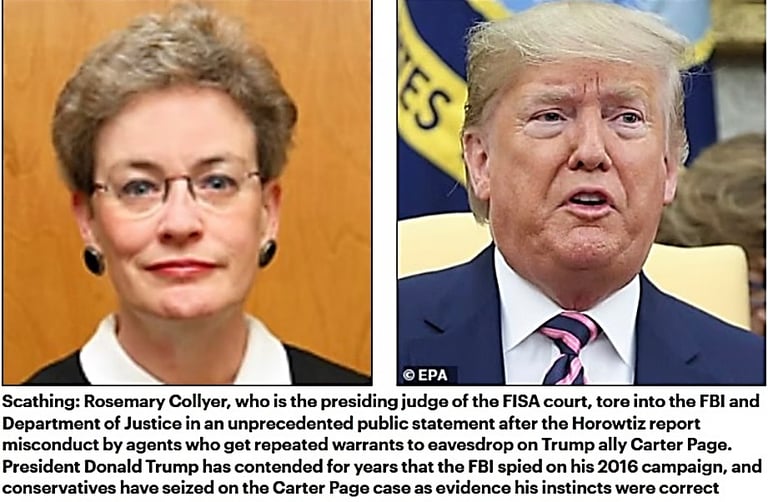
Rep. Nunes' statements came after FISC Judge Rosemary Collyer publicly blasted the FBI. "The frequency with which representations made by FBI personnel turned out to be unsupported or contradicted by information in their possession, and with which they withheld information detrimental to their case, calls into question whether information contained in other FBI applications is reliable," she wrote in a four-page order.
"I’m glad to see the FISC court come out and make a statement but your viewers need to know that the FISC court is also culpable in this madness, and I say that because we sent them two letters—very specific letters," Nunes told MacCallum Tuesday night. He then went on to explain that Republicans on the House Intelligence Committee sent Collyer the first letter in February of 2018. The second letter was sent in the summer of that same year. In both cases, Collyer and her fellow FISA judges decided to do... absolutely nothing.
"The point here, Martha, is the court knew about all this," Nunes explained. "I’m glad they’ve acted, I’m glad they said something, but the court has to be ended."
After saying that the FISC court -- the court that approves FISA warrants -- "had to be ended," Nunes clarified that he's not going to speak in "absolutes, but I will say that the way that the courts conducted themselves is totally inappropriate. They ignored clear evidence that we presented to them. Remember, they had this. The American people did not have it, we had seen it, they had it, they did absolutely nothing about it. So they've left really Congress no choice but to have to step in and fix this process."
Asked whether there are particular judges on the FISC court(s) that didn't treat this properly, Nunes answered, "Well, if you have the evidence that we presented to them, and you do nothing about it, and now they come out... and I'll have to look closely at the letter they sent out today... because I'm not so sure that they're being entirely truthful. Because I've read what we sent them, I just read it a few hours ago. Back in the summer of 2018, they had a lot of this information that they claim they just found out about."
In other words, Judge Rosemary Collyer and her fellow FISC judges may very well be involved in some serious damage control; they're putting it all on the FBI while they are just as culpable for this mess as all those dirty agents. After all, it's their job to make sure that the system isn't abused. They have to carefully check the requests. As Mark Levin explained on his radio show Tuesday evening, the fact that just about 100 percent of all FISA requests are approved shows that FISC judges don't take their responsibilities seriously.
Office of the Inspector General U.S. Department of Justice OVERSIGHT INTEGRITY GUIDANCE
Review of Four FISA Applications and Other Aspects of the FBI’s Crossfire Hurricane Investigation
https://www.justice.gov/storage/120919-examination.pdf
FISA court's chief judge issues unprecedented public rebuke to the FBI over serious 'misconduct' in warrants to wiretap Donald Trump ally Carter Page - to delight of president who calls case 'a SCAM!'
FBI filed four requests with the secret court established by the Foreign Intelligence Surveillance Act
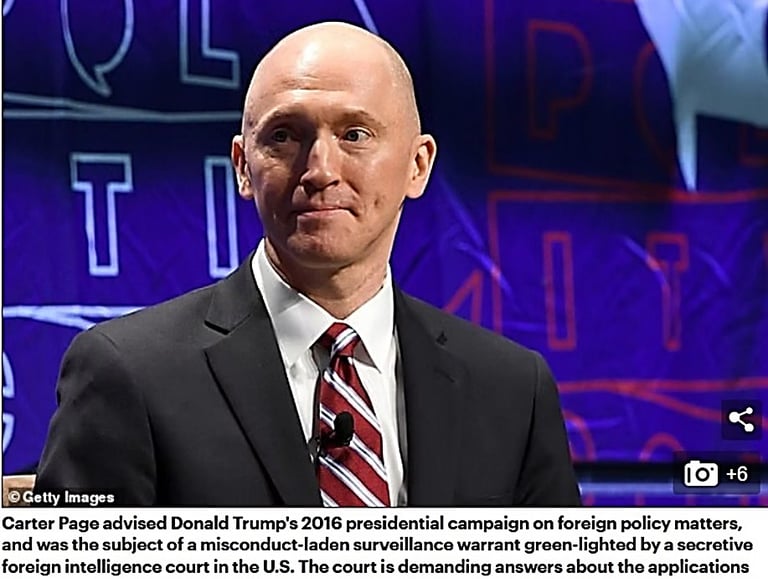
The requests were for surveillance warrants to spy on Carter Page, a foreign policy adviser to Donald Trump's 2016 presidential campaign
A report from the Justice Department's inspector general found 17 omissions or misleading statements in the FISA court warrant applications
Now the court's chief judge is demanding answers from the FBI
Court wants a briefing on how the bureau will avoid misleading the court, and reasons why agents should be considered trustworthy in the interim
Donald Trump tweeted Wow!' and added: 'Means my case was a SCAM!'
SCROLL DOWN FOR THE FULL COURT ORDER
By Reuters and David Martosko, U.s. Political Editor For Dailymail.com
Published: 16:15 EDT, 17 December 2019 | Updated: 19:13 EDT, 17 December 2019
A federal judge blasted the FBI on Tuesday for repeatedly submitting applications to wiretap former Trump campaign adviser Carter Page that were riddled with errors and omissions, and ordered the government to inform the court on how it plans to reform the process.
The scathing four-page order from Rosemary Collyer, the presiding judge over the U.S. Foreign Intelligence Surveillance Court (FISA), marks the first time the court has responded to the controversy, which became public last week with the release of a report by Justice Department Inspector General Michael Horowitz.
Donald Trump seized on the order, saying: 'Wow!'
He quotes a Fox News report and added: 'Statement by the Court was long and tough. Means my case was a SCAM!'
Inspector General Michael Horowitz said his office had identified at least 17 significant errors and omissions during the application process, including the altering of an email by an FBI lawyer.
The inspector general said that as the FBI sought to renew those warrants, it withheld from the Justice Department - and, in turn, the surveillance court - key information that the watchdog said cut against the premise that Page was a Russian asset.
The order from the judge is a rare public statement from the court, which operates mostly in secret as it receives applications from the FBI and Justice Department to eavesdrop on American soil on people it suspects of being agents of a foreign power.
The judge gave the government until Jan. 10 to file a submission outlining 'what it has done, and plans to do, to ensure that the statement of facts in each FBI application accurately and completely reflects information possessed by the FBI that is material to any issue presented by the application.'
In a report issued last week, the Justice Department's inspector general found 17 'significant errors or omissions' in warrant applications the FBI filed with the FISA court.
The court has long been criticized by Democrats and civil libertarians who consider it a virtual rubber-stamp for government requests, the overwhelming majority of which are approved, and for its secretive nature. Most surveillance warrants do not result in criminal prosecutions, and even when they do, there is no automatic right for a defendant to see the underlying application.
In the last week, Republicans who have previously been supportive of the government's robust surveillance powers have called for change and seized on allegations that a campaign aide to Donald Trump was treated unfairly.
The FBI relied in large part for its surveillance applications on opposition research compiled by Christopher Steele, a former British intelligence operative whose investigations into ties between Russia and Trump were funded by Democrats.
Horowitz said the FBI omitted from its application information about the reliability of Steele's reporting and that of one of his sources, and omitted the fact that Page had a prior relationship with another government agency.
FBI Director Christopher Wray told The Associated Press in an interview last week that the report had identified "unacceptable and unacceptable and unrepresentative of who we are as an institution." He said the bureau was taking more than 40 steps to deal with the issues.
Article 2.
Ted Cruz TORCHES Obama DOJ, FBI Over 'Grave Abuses' in FISA Spygate Report
https://pjmedia.com/trending/ted-cruz-torches-obama-doj-fbi-over-grave-abuses-in-fisa-spygate-report/
By Tyler O'Neil December 11, 2019
Sen. Ted Cruz, R-Texas on Capitol Hill, Wednesday, March 27, 2019. (AP Photo/Andrew Harnik)
On Wednesday, Department of Justice (DOJ) Inspector General Michael Horowitz testified about his damning report on FBI and DOJ FISA abuses before the Senate Intelligence Committee. During that testimony, Sen. Ted Cruz (R-Texas) delivered a devastating rebuke to former President Barack Obama's FBI and DOJ. As a former associate deputy attorney general at the DOJ, Cruz insisted that the sort of shenanigans the Obama administration used to spy on the Trump campaign would not have been tolerated while he was at the DOJ.
"This is a 434-page report that lays out what I consider to be a stunning indictment of the FBI and the Department of Justice, of a pattern of abuse of power," Cruz declared. "I will say both the Department of Justice and FBI for decades have had a great many honorable principled professionals with a fidelity to rule of law and this indictment. I’m an alumnus of the Department of Justice. This pattern of facts makes me angry. And it makes anyone who expects law enforcement to be nonpartisan and faithful to the law, it should make them angry as well."
Sen. @TedCruz: "This is 434-page report that lays out what I consider to be a stunning indictment of the FBI and the Department of Justice." pic.twitter.com/Q4QngYOkI6
— The Hill (@thehill) December 11, 2019
In order to surveil foreign agents or Americans suspected of interacting with foreign agents, the FBI and DOJ must get approval from a special court under the Foreign Intelligence Surveillance Act (FISA). Cruz noted that Horowitz's report "outlines 17 major errors and misstatements that were made by the FBI or DOJ in securing FISA warrants. A number of them are deeply, deeply troubling. These are not typos, these are not small, inadvertent errors, these are grotesque abuse of power."
The senator delved into three repeated omissions and misstatements: hiding the serious flaws in the notorious Steele dossier; omitting Carter Page's relationship as a source for U.S. intelligence; and hiding the fact that the dossier was funded by the Clinton campaign and the Democratic National Committee (DNC).
Cruz noted that FBI officials already knew to doubt the accuracy of the dossier — "which we now know was a bunch of malarkey." He cited the Horowitz report: "Steele misstated or exaggerated multiple sections of the reporting. It says that portions of it — particularly the more salacious and sexual portions — were based on 'rumor and speculation.'"
Indeed, the report reveals that FBI Director James Comey knew that the salacious "pee tape" claims were based on barroom rumors, but he still briefed Trump on them and leaked them to the media.
Cruz also drew attention to the FBI hiding Carter Page's former relationship as a source for U.S. intelligence. As The New York Times reported, FBI lawyer Kevin Clinesmith altered an email in the process of renewing a FISA wiretap on Page, concealing the fact that Page was a source for U.S. intelligence. "Mr. Clinesmith took an email from an official at another federal agency that contained several factual assertions, then added material to the bottom that looked like another assertion from the email’s author, when it was instead his own understanding," the Times reported.
"A lawyer at the FBI creates fraudulent evidence, alters an email that is in turn used as the basis for a sworn statement for the court that the court relies on. Am I stating that accurately?" Cruz asked Horowitz. The inspector general replied, "That is correct. That is what occurred."
Here's the video... @tedcruz: “A lawyer at the FBI creates fraudulent evidence, alters an email that is in turn used as the basis for a sworn statement for the court that the court relies on. Am I stating that accurately?"
IG HOROWITZ: “That is correct. That is what occurred.” pic.twitter.com/e1435JSqLN
— Jason Howerton (@jason_howerton) December 11, 2019
"The intelligence agency said, 'This guy is a source,' and he inserted, 'This guy is not a source.' If a private citizen did that in any law enforcement investigation, if they fabricated evidence and reversed what it said, in your experience would that private citizen be prosecuted for fabricating evidence, be prosecuted for obstruction of justice, be prosecuted for perjury?" Cruz asked.
"They certainly would be considered for that if there was an intentional effort to deceive the court," Horowitz admitted.
Cruz then turned to what may be the most damning omission: the FBI and DOJ hiding from the FISA court the key fact that Steele dossier information was funded by the DNC and the Clinton campaign.
"At some level this is the most effective oppo research dump in history," the senator declared. "The DOJ and the FBI did not inform the FISA court that this was being paid for by the DNC and the Clinton campaign." They omitted this information despite the fact that "Bruce Ohr's wife worked at Fusion GOP, the oppo research company being paid by the DNC."
"I can tell you from my time at the Department of Justice and from my time in law enforcement, any responsible leader — when hearing that you’re talking about sending in spies and sending in a wire tap on any presidential nominee — should say, 'What in the hell are we doing?!'" Cruz said. "I can tell you, when I was at DOJ, if someone said, 'Let’s tap Hillary Clinton,' or 'Let’s tap Bill Clinton or John Kerry,' the people there would have said, 'What in the hell are you talking about?!'"
Ending on a comedic note, the senator quipped, "This wasn’t Jason Bourne. This was Beavis and Butt-Head." THIS WAS RIGGED: Ted Cruz LIGHTS UP FBI Over Wiretapping Donald Trump
Article 3.
Horowitz report is damning for the FBI and unsettling for the rest of us
https://thehill.com/opinion/judiciary/473709-horowitz-report-is-damning-for-the-fbi-and-unsettling-for-the-rest-of-us
By Jonathan Turley, opinion contributor — 12/09/19 04:00 PM EST
The views expressed by contributors are their own and not the view of The Hill.
The analysis of the report by Justice Department inspector general Michael Horowitz greatly depends, as is often the case, on which cable news channel you watch. Indeed, many people might be excused for concluding that Horowitz spent 476 pages to primarily conclude one thing, which is that the Justice Department acted within its guidelines in starting its investigation into the 2016 campaign of President Trump.
Horowitz did say that the original decision to investigate was within the discretionary standard of the Justice Department. That standard for the predication of an investigation is low, simply requiring “articulable facts.” He said that, since this is a low discretionary standard, he cannot say it was inappropriate to start. United States Attorney John Durham, who is heading the parallel investigation at the Justice Department, took the unusual step to issue a statement that he did not believe the evidence supported that conclusion at the very beginning of the investigation.
Attorney General William Barr also issued a statement disagreeing with the threshold statement. In fact, the Justice Department has a standard that requires the least intrusive means of investigating such entities as presidential campaigns, particularly when it comes to campaigns of the opposing party. That threshold finding is then followed by the remainder of the report, which is highly damaging and unsettling. Horowitz finds a litany of false and even falsified representations used to continue the secret investigation targeting the Trump campaign and its associates.
This is akin to reviewing the Titanic and saying that the captain was not unreasonable in starting the voyage. The question is what occurred when the icebergs began appearing. Horowitz says that investigative icebergs appeared rather early on, and the Justice Department not only failed to report that to the Foreign Intelligence Surveillance Act court but removed evidence that its investigation was on a collision course with the facts.
The investigation was largely based on a May 2016 conversation between Trump campaign adviser George Papadopoulos and Australian diplomat Alexander Downer in London. Papadopolous reportedly said he heard that Russia had thousands of emails from Democratic nominee Hillary Clinton. That was viewed as revealing possible prior knowledge of the WikiLeaks release two months later, which was then used to open four investigations targeting the campaign and Trump associates. Notably, Democrats and the media lambasted Trump for saying the Justice Department had been “spying” on his campaign, and many said it was just an investigation into figures like Carter Page. Horowitz describes poorly founded investigations that included undercover FBI agents and a variety of different sources. What they really discovered is the main point of the Horowitz report.
From the outset, the Justice Department failed to interview several key individuals or vet critical information and sources in the Steele dossier. Justice Department officials insisted to Horowitz that they choose not to interview campaign officials because they were unsure if the campaign was compromised and did not want to tip off the Russians. However, the inspector general report says the Russians were directly told about the allegations repeatedly by then CIA Director John Brennan and, ultimately, President Obama. So the Russians were informed, but no one contacted the Trump campaign so as not to inform the Russians? Meanwhile, the allegations quickly fell apart. Horowitz details how all of the evidence proved exculpatory of any collusion or conspiracy with the Russians.
Even worse, another agency that appears to be the CIA told the FBI that Page was actually working for the agency in Russia as an “operational contact” gathering intelligence. The FBI was told this repeatedly, yet it never reported it to the FISA court approving the secret investigation of Page. His claim to have worked with the federal government was widely dismissed. Worse yet, Horowitz found that investigators and the Justice Department concluded there was no probable cause on Page to support its FISA investigation. That is when there was an intervention from the top of the FBI, ordering investigators to look at the Steele dossier funded by the Democratic National Committee and the Clinton campaign instead.
Who told investigators to turn to the dossier? Former FBI Deputy Director Andrew McCabe. He was fired over his conduct in the investigation after earlier internal investigations. Horowitz contradicts the media claim that the dossier was just a small part of the case presented to the FISA court. He finds that it was essential to seeking FISA warrants. Horowitz also finds no sharing of information with FISA judges that undermined the credibility of the dossier or Christopher Steele himself. Surprisingly little effort was made to fully investigate the dossier when McCabe directed investigators to it, yet investigators soon learned that critical facts reported to the FISA court were false. FISA judges were told that a Yahoo News article was an independent corroboration of the Steele dossier, but Horowitz confirms that Steele was the source of that article. Therefore, Steele was used to corroborate Steele on allegations that were later deemed unfounded.
The report also said that Steele was viewed as reliable and was used as a source in prior cases, yet Horowitz found no support for that and, in fact, found that the past representations of Steele were flagged as unreliable. His veracity was not the only questionable thing unveiled in the report. Steele relied on a character who, Horowitz determined, had a dubious reputation and may have been under investigation as a possible double agent for Russia. Other instances were also clearly misrepresented.
The source relied on by Steele was presented as conveying damaging information on Trump. When this source was interviewed, he said he had no direct information and was conveying bar talk. He denied telling other details to Steele. This was all known to the Justice Department, but it still asked for warrant renewals from the FISA court without correcting the record or revealing exculpatory information discovered by investigators. That included the failure to tell the court that Page was working with the CIA. Finally, Horowitz found that an FBI lawyer doctored a critical email to hide the fact that Page was really working for us and not the Russians.
Despite this shockingly damning report, much of the media is reporting only that Horowitz did not find it unreasonable to start the investigation, and ignoring a litany of false representations and falsifications of evidence to keep the secret investigation going. Nothing was found to support any of those allegations, and special counsel Robert Mueller also confirmed there was no support for collusion and conspiracy allegations repeated continuously for two years by many experts and members of Congress.
In other words, when the Titanic set sail, there was no reason for it not to. Then there was that fateful iceberg. Like the crew of the Titanic, the FBI knew investigative icebergs floated around its Russia investigation, but not only did it not reduce speed, it actively suppressed the countervailing reports. Despite the many conflicts to its FISA application and renewals, the FBI leadership, including McCabe, plowed ahead into the darkness.
Jonathan Turley is the chair of public interest law at George Washington University and served as the last lead counsel in a Senate impeachment trial. He testified as a Republican witness in House Judiciary Committee hearing in the Trump impeachment inquiry. Follow him @JonathanTurley.
ARTICLE 4.
What do the corporate capture of America, voter suppression and NSA spying have in common?
Chief Justice John Roberts, the man who appointed ALL of the judges to the FISA court
by LOLGOP
https://www.eclectablog.com/2013/07/what-do-the-corporate-capture-of-america-voter-suppression-and-nsa-spying-have-in-common.html
Even before this session the Supreme Court, the Roberts “Citizens United” Court had already demonstrated an frightening willingness to rule on the behalf of corporations whenever possible.
Senator Elizabeth Warren recently noted the 70% win rate of the U.S. Chamber of Commerce — America’s largest business lobby — with the Roberts Court and said, “Follow this pro-business trend to its obvious conclusion and you will end up with a Supreme Court that’s a wholly-owned subsidiary of the Chamber of Commerce.”
But until Roberts wrote the wholly nonsensical and offensive opinion gutting the Voting Rights Act, most Americans probably didn’t sense what a radical activist Roberts is.
In 2006, a Republican House, Senate and President renewed the Voting Rights Act for 25 years, a law that was the cornerstone of the civil rights movement and included provisions for the jurisdictions to opt out of pre-clearance for changes to the voting laws with the Department of Justice — if they were “clean” of voting rights violations for 10 years.
Roberts invalidated the formula that determines which jurisdictions are covered by the law and thus pre-clearance is no longer allowed until this Congress, which can barely name post offices, passes a replacement formula.
In the days since his decision, laws designed specifically to suppress minority voters have flooded out of North Carolina, where much of the state was covered under the old formula.
You need to know that destroying the Voting Rights Act has been Roberts’ goal for most of his adult life, notes The Nation‘s Ari Berman:
Justice Roberts has been opposed to the VRA for three decades, ever since he was a young lawyer in the Reagan Justice Department. His sweeping and radical decision yesterday was more about ideology than the law, constitutional principles or congressional deference be damned.
Now that he’s outed himself as an ideologue, it’s especially important to note a fact that hasn’t gotten much attention since former NSA contractor Edward Snowden revealed the massive scope of surveillance by the U.S. government. All of that surveillance has been approved by one body — the FISA court.
Guess who appoints every member of that court? Chief Justice John Roberts
All 11 judges — 10 Republicans and 1 Democrat — were appointed by Roberts. And his choices to not require approval by Congress — or anyone.
This is how we ended up with a FISA court that approves 99.9% of the government’s spying requests. Only 10 out of 20,909 were rejected. Another 1,000 of the approved requests required modification. 26 were withdrawn by the government.
“That’s a startling win rate for the government,” writes Ezra Klein.
But not so startling when you recognize that it all comes from decisions made by one man: Chief Justice John Roberts.
I Spy with My Little FBI… Massive FISA Violations
Kai Knorr 05/25/23
The FBI is promising to police its own use of a powerful warrantless surveillance tool that it can't seem to help abusing.
The FBI has pulled off the impressive feat of getting both parties to agree on something. Republicans and Democrats alike expressed outrage at the Bureau after recent revelations of illegal spying on Americans, including Black Lives Matter protesters and people involved in the January 6th insurrection.
This scandal comes soon after the FBI vowed to stop abusing its powers under the Foreign Intelligence Surveillance Act (FISA). The Bureau has unveiled a new set of rules for its agents aimed at curbing wrongful surveillance of US citizens, but privacy advocates and a Democratic lawmaker say the new policies won’t put an end to these sorts of abuses.
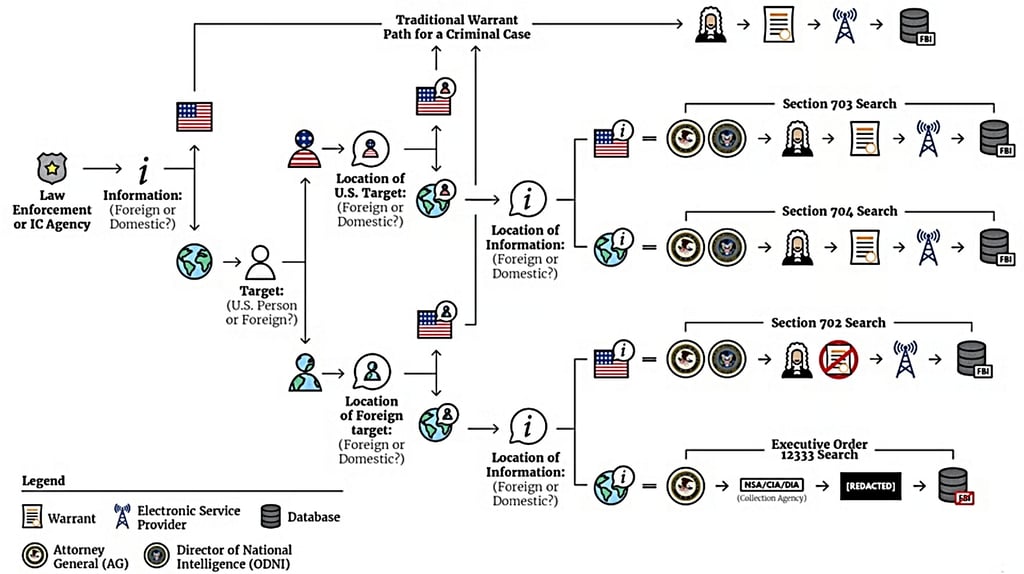
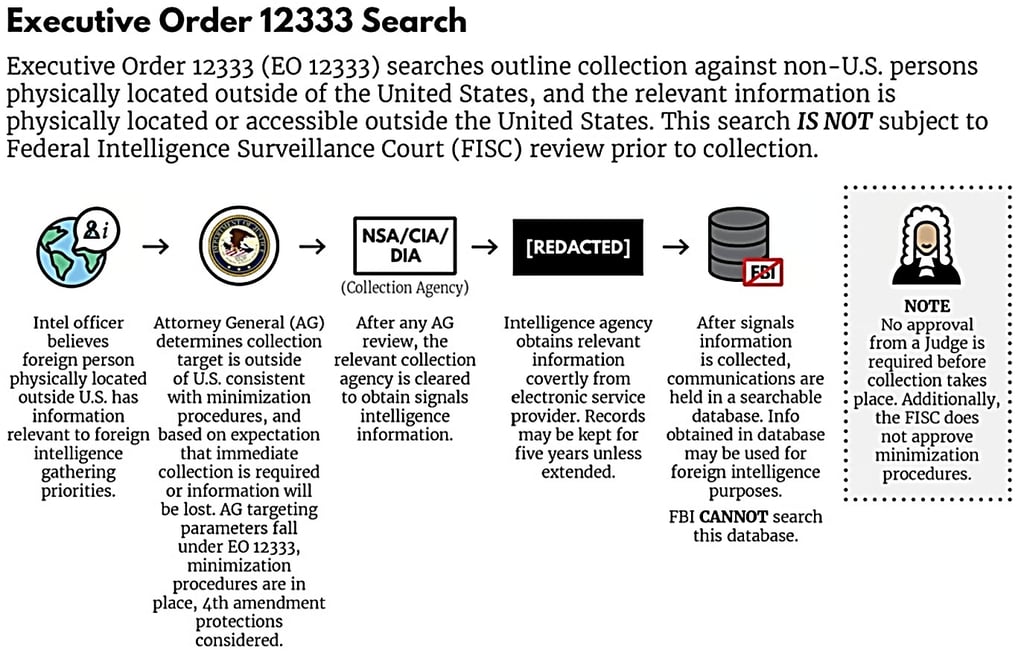
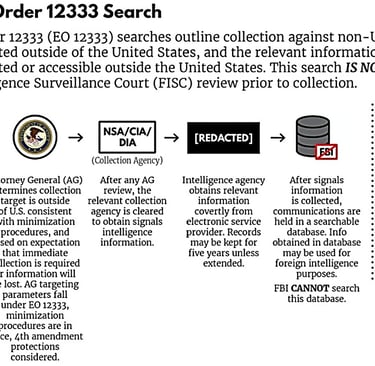
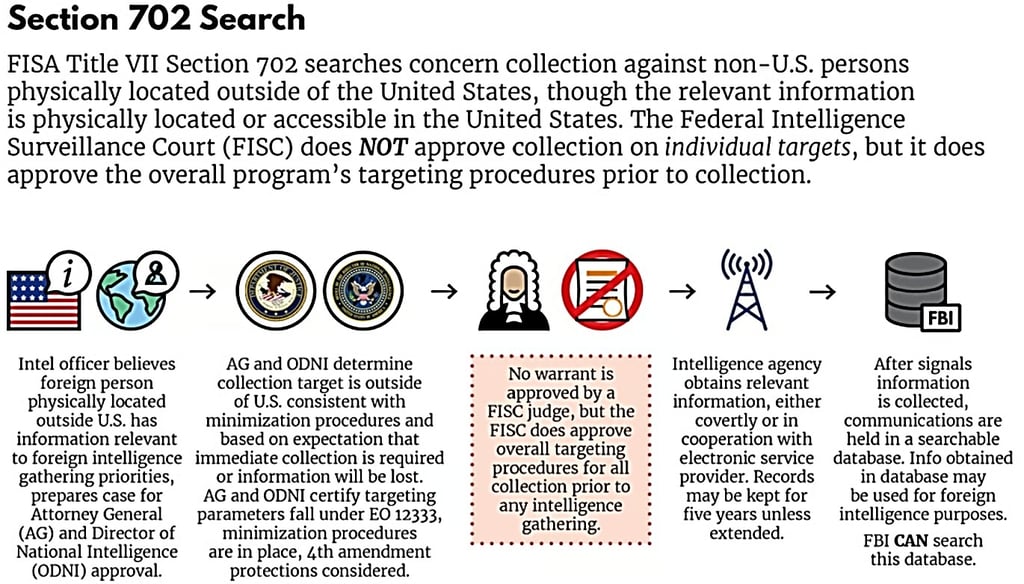
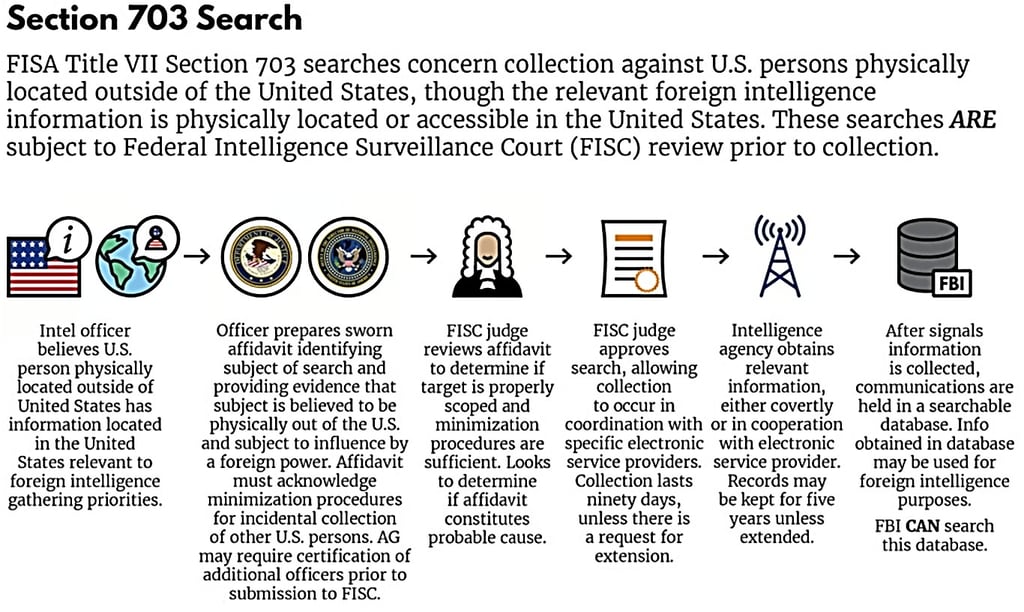
This unconstitutional surveillance stems from Section 702 of the Foreign Intelligence Surveillance Act (FISA), which gives the FBI a broad mandate to spy on foreign targets without a warrant. The Bureau uses this “critical national security tool” to root out terrorist plots and espionage against the US.
When the Bureau intercepts the phone calls, texts, and emails of foreigners outside the United States, it also collects the data of the Americans whom these foreign targets contact. This can help the FBI uncover the American contacts of shady actors overseas.
However, it also gives the FBI the power to warrantlessly spy on US citizens who happen to contact foreign targets — whether they are involved in criminal activity or not.
“The trouble for civil liberties of Americans happens when people overseas call someone in the United States,” said Matthew Guariglia, senior policy analyst at the Electronic Frontier Foundation. “Because there’s so much international communication, it creates a massive trove of information on US people and non-US people that the FBI stores in the same databases.”
This is all in spite of FISA’s stated purpose as an international surveillance tool — not a domestic spying program. FISA surveillance does not require a warrant because of its focus on foreign actors, but the FBI has pointed this tool inward on US citizens, violating their Fourth Amendment rights.
“The government may only use [Section 702] to target non-U.S. persons located outside of the United States. [But] the FBI insists on using it for routine domestic criminal investigations, without a warrant or probable cause,” wrote Jerrold Nadler (D-NY), ranking member of the House Judiciary Committee, in a statement on the recently declassified evidence of FBI wrongdoing.
These revelations of FBI abuses of Section 702 — a declassified FISA court order acknowledging “persistent and widespread problems” with the program — are only the latest in a string of discoveries like it.
FBI agents routinely search without judicial review through databases of Americans’s communication records they gather under FISA. According to an external audit by the Office of the Director of National Intelligence (ODNI), the FBI conducted roughly 3.4 million such searches of Section 702 databases in 2021, called “backdoor searches” because they circumvent the need for a warrant.
Worse, these backdoor searches often have little to do with genuine concerns about crime or the intelligence operations of foreign countries, even though this flies in the face of recent congressional amendments to the act and the FISA court’s rules for looking through section 702 data.
FBI agents have used their access to 702 data to snoop on their relatives and co-workers, individuals who came to the FBI to carry out repairs, journalists, and a US Congressman, for example.
“The FBI has access to this massive pool of collected information, and they’re using it to conduct mass surveillance on US persons without a warrant,” said Guariglia.
While backdoor searches fell to 204,090 in 2022 after the Bureau placed stricter requirements on how agents can look through 702 databases, experts point out that the rules amount to little more than an “honor system approach” to policing FBI employees’ access to 702 databases, so they won’t prevent backdoor searches from continuing.
‘It’s pretty unclear how much judicial oversight there is.’
Under the new rules FBI analysts must have a “specific factual basis” to suspect that their search will yield evidence of a crime or foreign intelligence information. They must also design their search terms to retrieve as little irrelevant data as possible. When agents make especially large or sensitive searches, they now need approval from an attorney.
These guidelines, however, don’t have the teeth to hold agents accountable when wrongful searches happen, according to Guariglia.
“I don’t see anything that would create some kind of audit system, transparency, or accountability measures,” he said. “It’s pretty unclear how much judicial oversight there is.”
And since the FBI has a track record of ignoring the same requirements that the new rules lay out, Guariglia believes that “we’re totally justified in thinking that weak guidelines like this would be ignored internally.”
The FISA court lets the FBI make backdoor searches as long as they’re related to foreign intelligence or a crime, but the Bureau has engaged in “widespread violations” of these standards, according to a 2019 court opinion.
On top of this, the Bureau has skirted even modest attempts by Congress to impede backdoor searches.
Since legislative reforms to FISA in 2018, the law has required the FBI to obtain a warrant when searching 702 databases for Americans’s communications in only a small number of criminal cases.
Although FBI investigators performed searches to which the new requirement should have applied roughly one hundred times after the changes to FISA, the Bureau did not request a warrant in a case like this even once, according to an ODNI report.
Guarglia doesn’t think the new guidelines would force agents to ask for a warrant even when the law technically requires it.
“I don’t know what the mechanism is to stop somebody from just querying information whether they need a warrant or not,” he said.
Since the extent of the FBI’s abuses of FISA has become public, “You would think that the guidelines put on FBI agents afterward would be a bit stronger,” said Guariglia.
“[But] what these guidelines reveal is that not much has changed in terms of the general philosophy of using this program,” he added.
On the other hand, agencies that oversee the FBI’s use of FISA claim the new guidelines are making a real difference. They point to the drop in backdoor searches between 2021 and 2022 as proof that the guidelines are effective.
After conducting audits of the FBI’s new rules and agents’ compliance with them, the Department of Justice along with the ODNI say they are “encouraged by the many FBI personnel who are demonstrating an improved understanding of the query standard.”
Now that agents receive clear training and have more layers of compliance to go through when they search 702 databases, they have cleaned up their act, the groups say.
However, experts point out that the FBI has broken past promises to stop warrantless surveillance of Americans, and congressional reform is the only way to stop them.
“The FBI says that they have instituted new procedures to make this kind of abuse impossible. They have made that promise before,” wrote Nadler, adding that, if the FBI continues its backdoor searches, “Perhaps they should not have access to this information at all.”
He added that he’ll oppose the renewal of Section 702, which Congress will decide this winter, unless he sees “significant changes to the law to prevent this abuse.”
Unlike other courts, the FISA court has evaded legal counsel from outside experts. When these individuals try to provide the court with input, they “don’t have full access to the information they need and they are left out of many important cases,” according to the Brennan Center.
The secretiveness of intelligence agencies stands in the way of stopping warrantless backdoor searches, Guarglia argued.
“Part of the problem of putting a stop to mass surveillance and [protecting] civil liberties is that these problems are so opaque,” he said. “[The FBI] is so secretive that even pushing for reasonable reforms can often be quite hard.”
One of the main agencies responsible for keeping the FBI in line when it uses FISA’s powers — the FISA court — operates in a “secret and one-sided” fashion and “often only hears from the government,” the Brennan Center for Justice said in a letter pleading for reform Section 702.
Unlike other courts, the FISA court has evaded legal counsel from outside experts. When these individuals try to provide the court with input, they “don’t have full access to the information they need and they are left out of many important cases,” according to the Brennan Center.
While the FBI has touted Section 702 as an invaluable counterterrorism asset, “Don’t trust things on their face value,” countered Guariglia.
“To justify these mass surveillance programs, people in the intelligence community will often come out and say, ‘This program has single-handedly thwarted a dozen attacks,’ but never elaborate or go into specifics,” he said.
The upcoming renewal vote for Section 702 gives lawmakers the chance to make backdoor searches explicitly illegal under FISA.
“The problem [with Section 702] is that the rules technically condone this stuff,” said Guariglia. “Whether or not it’s constitutional is a good question. But they call it a backdoor search for a reason because it’s a loophole.”
“What any renewal of Section 702 this winter should look like is closing backdoor searches. There should be no instance in which the FBI can get communications records of Americans without a warrant,” he added.

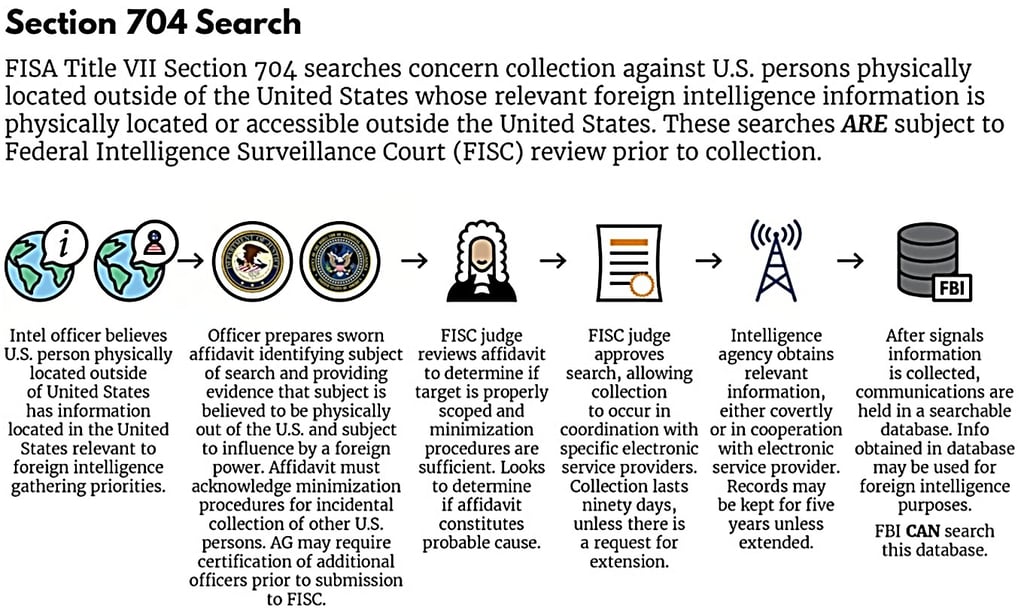
History of the Illegal FISA Court
In 1978 Congress established the Foreign Intelligence Surveillance Court as a special court and authorized the Chief Justice of the United States to designate seven federal district court judges, drawn from seven judicial circuits, to review applications for warrants related to national security investigations. Judges serve for staggered, non-renewable terms of no more than seven years. Pursuant to the Foreign Intelligence Surveillance Act (92 Stat. 1783), the court entertains applications submitted by the U.S. government for approval of electronic surveillance, physical search, and other investigative actions for foreign intelligence purposes. The legislation was a response to a report of the Senate Select Committee to Study Governmental Operations with Respect to Intelligence Activities (the "Church Committee"), which detailed allegations of executive branch abuses of its authority to conduct domestic electronic surveillance in the interest of national security. Congress also was responding to the Supreme Court's suggestion in a 1972 case (U.S. v. U.S. District Court, also known as the "Keith case" (407 U.S. 297)) that under the Fourth Amendment a judicial warrant might be required to conduct national security related investigations.
The judges of the Foreign Intelligence Surveillance Court travel to Washington, D.C., to hear warrant applications on a rotating basis. Most of the court's work is conducted ex parte as required by statute and due to the need to protect classified national security information. The act of 1978 also established a Foreign Intelligence Surveillance Court of Review, presided over by three district or appeals court judges designated by the Chief Justice, to review, at the government's request, the decisions of the Foreign Intelligence Surveillance Court. The review court had no occasion to meet until 2002. The USA Patriot Act of 2001 (115 Stat. 272) expanded the time periods for which the Foreign Intelligence Surveillance Court can authorize surveillance and increased the number of judges serving the court from seven to eleven. The eleven judges must be drawn from at least seven judicial circuits, and no fewer than three are to reside within twenty miles of the District of Columbia.
Pursuant to the USA Freedom Act of 2015 (129 Stat. 268), beginning in 2015, the Director of the Administrative Office of the U.S. Courts started publishing an annual report on the activities of the Foreign Intelligence Surveillance Court. Those reports are published on the official U.S. Courts website.
Director's Report on Foreign Intelligence Surveillance Courts' Activities
https://www.uscourts.gov/data-news/reports/statistical-reports/directors-report-foreign-intelligence-surveillance-courts-activities
This report contains statistics reported by the Foreign Intelligence Surveillance Court (FISC) on the number of applications or certifications submitted to the court and whether those submissions were granted, modified, or denied. It also includes information relating to amicus curiae appointments by the Foreign Intelligence Surveillance Courts.
On June 2, 2015, Congress enacted the USA FREEDOM Act of 2015 (Pub. L. No. 114-23). One of the provisions of this Act, codified at 50 U.S.C. § 1873 (a) (2), which requires the Director of the Administrative Office of the U.S. Courts (AO) to publish the report on the AO’s internet website.
The report is required to contain the following information (unless otherwise stated, all section numbers refer to Title 50 of the U.S. Code):
the number of applications or certifications for orders submitted under each of sections 1805, 1824, 1842, 1861, 1881a, 1881b, and 1881c;
the number of such orders granted under each of those sections;
the number of orders modified under each of those sections;
the number of applications or certifications denied under each of those sections;
the number of appointments of an individual to serve as amicus curiae under section 1803, including the name of each individual appointed to serve as amicus curiae;
the number of findings issued under section 1803(i) that such appointment is not appropriate; and
the number of times the Foreign Intelligence Surveillance Court and the Foreign Intelligence Surveillance Court of Review exercised authority under Chapter 21 of Title 18 and a description of each use of such authority.
Report
Corrections made in June 2025: The redacted information in the report—the number of certification(s) submitted under 50 U.S.C. § 1881a and the number of certification(s) pending—is no longer considered classified by the executive branch, and those redactions have been removed. The report also now includes the number of times the Foreign Intelligence Surveillance Court and the Foreign Intelligence Surveillance Court of Review exercised authority under chapter 21 of Title 18 and a description of each use of such authority as required by § 1873(a)(1)(G), as amended by the Reforming Intelligence and Securing America Act (RISAA).
Join us in advocating against the misuse of technology.
contact@targetedhumans.org
© 2025. All rights reserved.


Targeted Humans Inc.