There are no Conspiracy theories, there are only truth and lies.

STUDIES ON TARGETED INDIVIDUALS
GREAT ARTICLE:
Remote Neural Torture --
Theoretical Modern Methods of No-Touch Torture
Daniel
Apr 5, 2025
https://jaredweisinger.medium.com/remote-neural-torture-theoretical-modern-methods-of-no-touch-torture-56131d17165c
Introduction: Targeted Individuals and No-Touch Torture
“Targeted Individuals” (TIs) are self-identified people [identified as targets by FISA court] who believe they are victims of organized stalking, surveillance, and harassment by shadowy adversaries using advanced technologies (Gangstalking and Targeted Individuals — ISD). While many experts view such claims as delusional, the concept of no-touch torture — inflicting suffering without physical contact — merits examination in light of emerging neurotechnologies. Modern military and neuroscience research has produced methods to remotely monitor and influence the human brain, raising the theoretical possibility of torturing someone from a distance. This report explores how psychological and physical torture tactics might be replicated through real-time neural surveillance and remote neuromodulation. We draw on known military psychological operations, brain-computer interface (BCI) advances, and neuroscience to assess the plausibility that such methods could already exist today.
Psychological Torture via Remote Neural Surveillance
Conventional psychological torture (PT) induces extreme mental distress without directly harming the body. PT techniques include prolonged sleep deprivation, sensory disorientation, forced self-induced pain, solitary confinement, mock executions, humiliation, mind-altering drugs, and exploiting phobias (The Neurobiology of Psychological Torture — The Center for the Study of Human Rights in the Americas (CSHRA)). These methods break victims by attacking their psyche — causing paranoia, fear, and hopelessness — and can lead to delirium, psychosis, or post-traumatic stress disorder (The Neurobiology of Psychological Torture — The Center for the Study of Human Rights in the Americas (CSHRA)). A theoretical remote equivalent would use continuous brain surveillance and stimulus injection to mimic these traumas:
Real-Time Thought Monitoring and Threats: If an assailant could tap into a person’s neural activity, they might detect fear or specific thoughts in real time. Advanced brain-decoding AI now enables translation of brain activity into text, essentially “reading” a person’s thoughts from noninvasive scans (AI makes non-invasive mind-reading possible by turning thoughts into text | Artificial intelligence (AI) | The Guardian). In theory, a tormentor with such a neural surveillance system could monitor the victim’s inner dialogue and emotional state continuously. As soon as the target feels a glimmer of hope or plans an escape, the system could respond with tailored threats or distressing stimuli. For example, if the victim silently thinks, “Maybe I’m safe now,” the tormentor could use a “voice-to-skull” transmission — a technology that uses directed energy to project audible speech into a person’s head — to whisper “You are never safe” at that exact moment. The microwave auditory effect is one known method of transmitting sound directly into the brain using pulsed radiofrequency energy (Microwave auditory effect — Wikipedia). Discovered in the 1960s, this effect causes a person to hear a buzzing or speech inside their skull without any external sound (Microwave auditory effect — Wikipedia). U.S. military research even explored a “Voice of God” weapon using microwaves to beam voices into enemy soldiers’ heads (The Microwave Scream Inside Your Skull — WIRED) (Weapons: Death Ray Replaced By The Voice of God — StrategyPage). A malicious actor could exploit this to make a victim hear derisive voices or threats reacting to their private thoughts, creating the ultimate paranoia. The victim would feel there is no mental privacy, amplifying worry to an extreme level — essentially a remote “worry-to-death” scenario of relentless psychological terror.
Simulated Mock Executions and Phobia Exploitation: Traditional mock executions involve falsely convincing a prisoner they are about to be killed — a gun is pressed to the head, the trigger pulled with blanks, etc. Remotely, one could hijack the victim’s sensory perceptions to simulate life-threatening scenarios. With real-time neural monitoring, an AI could detect what the victim fears most (e.g. drowning, suffocation, heights) by analyzing amygdala activity or stress responses. Then, through neural stimulation or augmented reality fed directly to the brain’s sensory areas, the tormentor could force the victim to experience their worst nightmare. For instance, triggering the vestibular cortex and visual cortex could create the terrifying illusion of falling from a great height whenever the person closes their eyes. Or stimulating the insular cortex (involved in breathlessness and suffocation feelings) could induce a sensation of choking or drowning out of nowhere. These experiences would be indistinguishable from reality to the target. Coupled with random “near-death” incidents — e.g. overriding the brain’s autonomic signals to briefly stop the heart or breathing (discussed later) — the victim lives in a perpetual mock execution. The threat is never carried out to completion, but the fear is real and ceaseless. [In reality, for TI's the threat of being radiated to death, suicided, or disappeared is always present because there are plenty of examples of many websites.]
Sleep Deprivation and Sensory Overload: Remote neurotorture could also replicate sleep deprivation, a hallmark of psychological torture (The Neurobiology of Psychological Torture — The Center for the Study of Human Rights in the Americas (CSHRA)). By remotely stimulating the brain’s alertness centers or inducing painful sensations whenever the victim tries to sleep, the tormentor can prevent any rest. For example, the ascending arousal system in the brainstem and hypothalamus keeps us awake; targeted stimulation of these regions (or disruption of the sleep-regulating suprachiasmatic nucleus) at night could keep the victim in a state of forced insomnia. Additionally, a combination of remotely induced targeted noise and hallucinations can create sensory disorientation similar to classic torture methods. Reports from TIs often describe “targeted noise harassment” — strange sounds or voices that only they can hear (Gangstalking and Targeted Individuals — ISD) (Gangstalking and Targeted Individuals — ISD). Technologies like ultrasonic or microwave transmission could bombard the victim with high-pitched ringing or commands that no one else perceives. Over time, this erodes the victim’s sanity. Table 1 summarizes some psychological torture symptoms and how a remote system might induce them via neural targets. [This is a real experience for most TI's. There are many ways to keep a TI fearful and full of anxiety.]
Table 1: Psychological Torture Effects and Potential Remote Induction
Torture Effect Conventional Method Remote Neural Method (Hypothetical) Extreme Fear of Imminent Death Mock execution (fake killing) (The Neurobiology of Psychological Torture — The Center for the Study of Human Rights in the Americas (CSHRA)) Stimulate fear circuits (amygdala) when victim is vulnerable; inject “voices” confirming their death is near via microwave auditory effect (Microwave auditory effect — Wikipedia). Paranoia & Helplessness Threats, humiliation, unpredictability Real-time thought surveillance to anticipate hopes; instant punitive feedback (e.g. voices or pain) to crush any sense of control. Victim believes the tormentor is “inside their head.” Sleep Deprivation Constant noise/light, forced waking Stimulate brain’s alert centers to prevent sleep; trigger pain or muscle spasm when EEG signals indicate onset of sleep. Victim is awakened internally whenever they doze off. Sensory Disorientation Solitary confinement, sensory overload Feed false sensory inputs to brain: e.g. make victim hear non-existent loud noises or see frightening hallucinations via visual cortex stimulation. Alternately, use directed energy to create real noises just below hearing threshold to unnerve the target. Exploitation of Phobias Using snakes, dogs, or phobic triggers in cell Detect phobic thoughts (via heightened amygdala response) and project phobia-related stimuli into victim’s mind. For instance, if someone fears spiders, stimulate somatosensory cortex to make them feel spiders crawling on their skin when none are there. [They implant something in the TI's throat they make GROWL to wake the TI up so they can't sleep.]
By combining these techniques, a perpetrator could orchestrate a sophisticated remote psychological torture program. The victim’s own mind becomes the battleground, with their neural signals both monitored and manipulated to maximize terror. This scenario, while speculative, builds on real capabilities: scientists have shown they can decode continuous speech from brain activity (AI makes non-invasive mind-reading possible by turning thoughts into text | Artificial intelligence (AI) | The Guardian), induce auditory hallucinations with energy beams (Microwave auditory effect — Wikipedia), and inflict symptoms like nausea, dizziness and pain from afar using directed radiofrequency energy (Havana syndrome: ‘directed’ radio frequency likely cause of illness — report | US foreign policy | The Guardian). Notably, a 2020 National Academies report on the so-called “Havana Syndrome” concluded that directed, pulsed RF energy was the most plausible cause of mysterious neurological symptoms in U.S. diplomats (Havana syndrome: ‘directed’ radio frequency likely cause of illness — report | US foreign policy | The Guardian). This suggests that an unseen antagonist could already use directed energy weapons to produce physical and psychological distress remotely — essentially validating one aspect of what TIs describe as “electromagnetic torture.” [This is a real experience for some TI's. A specific agenda is chosen for each TI.]
Physical Torture via Remote Neuromuscular Control
Beyond psychological torment, traditional torture often involves direct physical pain or coercion: beatings, stress positions, suffocation, etc. In a modern no-touch scenario, the aggressor would instead control the victim’s own nervous system to inflict pain and bodily harm from the inside. The human body can be made to betray itself if external signals hijack the neural pathways that govern muscles and sensory perception. Recent advances in bioelectronics and neurostimulation hint at how this is possible.
1. Remote Control of Muscles and Movement:
Every voluntary movement we perform is triggered by electrical impulses in the motor cortex of the brain, which travel down the spinal cord to contract muscles. If an external device can generate those same impulses remotely, it could force a person’s limbs to move against their will. Researchers have already demonstrated rudimentary “remote control” of a body: in one experiment, a scientist sent a brain signal via the internet to another person, causing the second person’s finger to move involuntarily (via activating their motor cortex with transcranial stimulation). More directly, transcranial magnetic stimulation (TMS) of the motor cortex can induce muscle twitches — for example, a magnetic pulse over the brain region controlling the leg will make the leg kick. Such technology, when refined, could be weaponized to enforce stress positions. A victim could be forced to stand for hours, unable to sit or rest, by stimulating postural muscles whenever they try to collapse. Prolonged standing is a known torture method that causes excruciating pain and swelling; a remote system could induce the same by locking the victim’s knees or spine in place via neural commands. Conversely, the tormentor might collapse the victim at will — e.g. suddenly shutting off signals to leg muscles to make them fall. This unpredictability itself is a form of torture, as the person loses all control of their body.
New tools suggest fine-grained motor control is plausible. The U.S. Defense Advanced Research Projects Agency (DARPA) has funded brain interface research aiming to read and write neural signals with high precision. The Next-Generation Nonsurgical Neurotechnology (N3) program, for instance, sought to create noninvasive or minimally invasive brain-machine interfaces that can “read from and write to multiple points in the brain at once” with spatial precision down to sub-millimeter regions (Next-Generation Nonsurgical Neurotechnology). One N3 team at Battelle developed electromagnetic nanotransducers — nanoparticles delivered into specific neurons — which convert magnetic fields into electric currents and vice versa, enabling bidirectional communication with those neurons (Six Paths to the Nonsurgical Future of Brain-Machine Interfaces). In essence, these particles can stimulate or record neural activity when commanded by an external electromagnetic field. If such nanotransducers were distributed in the motor cortex or even in peripheral nerves, an attacker could fire the correct pattern of magnetic pulses to contract particular muscles remotely. For example, nanoparticles lodged in the neurons controlling the eyelid might be triggered to force the eyes shut. A targeted individual driving a car could suddenly find their eyelids involuntarily closing, a terrifying scenario that could cause a crash (and has been reported anecdotally by some TIs). Likewise, stimulating the neurons of the hand that holds a weapon could force a hostage to drop it, or conversely, to tighten their finger on a trigger. Table 2 lists a few hypothetical physical torture tactics and how remote neural control could achieve them. [While it may be possible to make muscles move remotely, many TI's have a system of implants called Wireless Body Area Network. They are clinical trial covert unwilling victims.]
Table 2: Physical Torture Tactics and Remote Neurological Replication
Physical Torture Tactic Traditional Method Remote Neural Equivalent Stress Position (Prolonged Standing) Forcing prisoner to stand long periods (often shackled upright) Stimulate postural muscle motor neurons to contract continuously, preventing the victim from sitting. If they attempt to crouch, automatically trigger spinal extensor muscles via implanted nanotransducers (Six Paths to the Nonsurgical Future of Brain-Machine Interfaces), locking them upright. Blinding or Disorientation Blindfolding, or flashing bright light Trigger involuntary eyelid closure or induce temporary blindness via visual cortex inhibition. Alternatively, force eyes open (stimulate levator eyelid muscle) to prevent blinking and induce pain/drying. Choking/Suffocation Waterboarding or strangulation Remotely suppress signals to the diaphragm and intercostal muscles (via phrenic nerve control), causing an inability to breathe for short intervals. This creates the sensation of suffocation on demand, without any restraint around the neck. Beatings and Electric Shocks Physical blows or cattle prod shocks Directly stimulate pain pathways in the somatosensory cortex or peripheral nerves. For instance, activate nociceptive (pain) fibers in the arm to mimic the agony of a sharp electric shock or limb injury, even though no wound is present. Victim feels genuine pain out of nowhere ([Havana syndrome: ‘directed’ radio frequency likely cause of illness — report Muscle Spasms/Cramping Forced exertion or contortions to cause cramps Inject erratic stimulation to muscle control neurons, causing severe muscle spasms (e.g. charley horse cramps) at the tormentor’s whim. These spasms can be targeted (leg, back, etc.) to incapacitate the victim with pain.
The key to these remote physical effects is neural interface technology that can target specific neural circuits. Remarkably, much of this tech is under active development for medical or military applications. One breakthrough concept is neural dust — tiny wireless implants that can be scattered throughout the nervous system. These devices (on the order of millimeters to hundreds of microns) contain electrodes and sensors that can record neural activity or stimulate nerves when powered wirelessly (Sprinkling of neural dust opens door to electroceuticals — Berkeley News). In 2016, UC Berkeley engineers demonstrated the first dust-sized, batteryless sensors that can be implanted in a rat and stimulate nerves using ultrasound as a power source. The idea is to introduce thousands of such “neural dust” chips into the body, creating an internal mesh network that interfaces with neurons. Once implanted, these motes can monitor or control the nerves and muscles and remotely monitor neural activity (Neural dust — Wikipedia). In a medical setting, this could treat epilepsy or control prosthetics. In a torture setting, this offers an array of “puppet strings” embedded in the victim. An external controller — using ultrasound, magnetic fields, or radio waves — could command these neural dust sensors to fire electrical impulses into any connected nerve. The victim could thus be puppeteered: their fingers might move to write a false confession, their legs may walk them into danger, or their vocal cords might speak on command. [With this method of direct implants, it is possible to keep a person from eating by not allowing their hands to reach their mouth. A TI has been known to experience this type of torture.]
One particularly insidious application is remotely controlled respiratory torture. The brainstem’s medulla oblongata contains the respiratory center that rhythmically signals the diaphragm to contract for breathing. If an external system sent disruptive signals (via nanoparticles or ultrasonic stimulation) to the brainstem or phrenic nerve, it could alter this rhythm. Imagine the controller remotely causing the victim to stop breathing for 30 seconds — not long enough to kill, but enough to induce panic and oxygen starvation. Just as they’re about to lose consciousness, control is released and the victim gasps for air, only for the cycle to repeat. This is equivalent to the torture of controlled drowning (as in waterboarding), but inflicted by invisible technological means. The brainstem also houses cardiovascular centers that regulate heart rate via the vagus nerve. In theory, signals could be injected to drastically slow the heart (causing dizziness and chest pain) or speed it up to dangerous levels, simulating a heart attack. The vagus nerve, which originates in the medulla, innervates the heart and can decrease heart rate (The Vagus Nerve: A Key Player in Your Health and Well-Being). A remotely controlled vagus stimulation (much like a clinical vagus nerve stimulator implant but used malevolently) could produce bradycardia (slow heartbeat) until the victim nearly blacks out, or conversely a withdrawal of vagal tone causing tachycardia and blood pressure spikes. Vital organs thus become leverage for torture — all without laying a finger on the subject.
It’s worth noting that the building blocks for such neuromuscular domination are being actively studied. For example, scientists at MIT recently developed magnetoelectric nanoparticles — 250-nanometer discs — that can be injected into a brain region and then activated by an external magnetic field to produce electric pulses in nearby neurons. These magnetoelectric nanodiscs have a magnetostrictive core and piezoelectric shell; when a magnetic field is applied, they physically deform and generate an electric potential. In tests, a magnetic pulse from outside the body caused the particles to deliver electrical impulses to neurons, firing them without any wires or implants. This technology was touted as a way to do deep brain stimulation without surgery for Parkinson’s or depression treatment. But in the wrong hands, the same injected nanodiscs could turn into a torture toolkit: an aggressor could remotely trigger intense pain or muscle contractions if those discs were targeted to pain fibers or motor neurons. Crucially, this method does not require genetic modification of the victim’s neurons (Magnetoelectric nanodiscs offer remote brain stimulation without implants or genetic modification), meaning it could theoretically be used on anyone once the nanoparticles are administered (perhaps covertly, via a tainted beverage or aerosol). DARPA’s N3 program similarly considered non-surgical “nanotransducers” delivered to the brain to facilitate remote read/write of neural signals (DARPA Awards $9.8M To Rice University For Next-Gen Nonsurgical Neurotechnology Program — nta.org) (Six Paths to the Nonsurgical Future of Brain-Machine Interfaces). As these technologies mature, the gap between science fiction and reality narrows: remote physical torture moves from the realm of imagination to plausible future (or present) capability.
DARPA’s N3 and Neural Dust: A Platform for Remote Neural Access
A centerpiece of the plausibility argument is the rapid development of brain-computer interfaces that do not require surgical implants. DARPA’s N3 (Next-Generation Nonsurgical Neurotechnology) project (2018–2022) explicitly aimed to create a “high-performance, bi-directional” neural interface system for able-bodied users, without surgery. In other words, a headset or external device that can read neural activity and write information into the brain in real time. This is not a conjecture but a stated goal: N3 sought to overcome the precision limits of EEG and transcranial stimulation by developing new methods to interface with neurons at multiple points simultaneously (Next-Generation Nonsurgical Neurotechnology). Researchers pursued two general paths: completely noninvasive (external only) and “minutely invasive” (using nanotransducers delivered into the brain). The outcomes of N3 included approaches using optics, acoustics (ultrasound), and electromagnetics to reach into the brain (Six Paths to the Nonsurgical Future of Brain-Machine Interfaces). For example:
Optical & Acoustical Hybrid: Carnegie Mellon’s team used ultrasound to guide light into the brain for recording neural activity, and overlapping electric fields to stimulate specific neurons — exploiting neurons’ non-linear response to fields for localized activation (Six Paths to the Nonsurgical Future of Brain-Machine Interfaces). This suggests one can focus on a small set of neurons deep in the brain by combining energy modalities, all from outside the skull.
Magnetic Nanotransducers: Battelle’s team delivered electromagnetic nanoparticles (nanotransducers) into neurons of interest, which then communicate with an external transceiver magnetically. These nanotransducers essentially turn neural electrical impulses into magnetic signals detectable outside, and allow external magnetic pulses to fire the neuron. It’s a bi-directional nano-scale radio for the brain. The N3 program announcement noted these could be temporary and non-surgically delivered, possibly via inhalation or crossing the blood-brain barrier (Six Paths to the Nonsurgical Future of Brain-Machine Interfaces).
Magneto-Genetic and Optical: Rice University’s team took a genetic approach, making neurons express magnetically sensitive proteins (magnetogenetics) so that external magnetic fields can trigger them. They combined this with diffuse optical tomography for read-out (Six Paths to the Nonsurgical Future of Brain-Machine Interfaces). Though genetic modification might not be practical for covert use, it proves the concept that magnetic fields can write to the brain if the neurons are receptive.
Ultra-Sensitive Magnetometers: Teledyne’s team developed micro-optically pumped magnetometers to detect the faint magnetic fields of neural firing, and used focused ultrasound to stimulate neurons (Six Paths to the Nonsurgical Future of Brain-Machine Interfaces). This shows even without implants, ultra-sensitive sensors can pick up brain activity (like a portable MEG brain scanner), and ultrasound beams can causally influence brain circuits.
The common theme is that N3 achieved (or aimed to achieve) the ability to “tune in” to specific brain regions and modulate them remotely. At the conclusion of the program, DARPA officials were optimistic that wearable neural interfaces with millimeter-range links to the brain could become practical (Six Paths to the Nonsurgical Future of Brain-Machine Interfaces). While the intended use is for soldiers to control drones or communicate silently with AI, the side effect is a technology that a malicious actor could weaponize. A high-performance N3 device in the wrong hands would allow access to the neural pathways for movement, sensation, and perhaps even thought.
Consider the brain as having various “control centers”: the motor cortex directs voluntary movements, Broca’s and Wernicke’s areas handle speech and language, the limbic system (amygdala, hippocampus) processes emotions and memories, and the autonomic centers in the brainstem manage vital functions like heart rate and breathing (The Vagus Nerve: A Key Player in Your Health and Well-Being). Now imagine an infiltrative technology — like neural dust or nanotransducers — that targets each of these centers. For motor control, the primary motor cortex on the precentral gyrus could be laced with nanoparticles, allowing precise activation or inhibition of any body part (mapped by the motor homunculus in that region). For speech, one could target Broca’s area (speech production) and the motor neurons of the tongue, larynx, and jaw. For autonomic control, nanoparticles in the medulla oblongata could modulate the vagus nerve output, which “regulates involuntary processes like heart rate, blood pressure, and respiration” (The Vagus Nerve: A Key Player in Your Health and Well-Being). Indeed, vagus nerve stimulation is already used clinically to treat epilepsy and depression by sending pulses to the brain; a hostile agent could similarly use it to induce bradycardia or digestive pain. Meanwhile, an array of neural dust motes in the somatosensory cortex could induce any tactile sensation — from burning heat to cutting pain — anywhere on the body by targeting the appropriate cortical area for that body region.
Such a system would effectively give the tormentor a ”dashboard” of the victim’s nervous system. With a graphical interface, they could select an organ or function to torture: click “heart” to cause arrhythmia, click “legs” to induce convulsions, click “fear center” to spark a panic attack. This sounds dystopian, but each component is grounded in developments reported in scientific literature. The concept of injectable nano-network is no longer fantasy: one 2021 study demonstrated magnetoelectric nanoelectrodes that can be injected and wirelessly transmit electrical signals to the brain via an external magnetic field (Nonresonant powering of injectable nanoelectrodes enables …). Another team created nano-sized wireless stimulators powered by alternating magnetic fields that can fire neurons without implants (Magnetoelectric nanodiscs offer remote brain stimulation without implants or genetic modification). DARPA’s own materials envisioned combining multiple devices to interface with many brain points at once). Even the time latency is impressive — N3 aimed for reading/writing with only ~50 millisecond delay (Next-Generation Nonsurgical Neurotechnology), meaning real-time feedback loops (critical for responsive torture sequences) are feasible.
It is crucial to emphasize that no evidence shows DARPA intended any of this for torture or coercion. These projects are aimed at aiding soldiers and patients. However, this exploration highlights that the same underlying capabilities — remote neural access, precision stimulation, bidirectional control — could enable a form of torture unlike any seen before: one where the victim might have no scars, no physical implant to detect (if nanoparticles are used), and no escape even in the solitude of their mind.
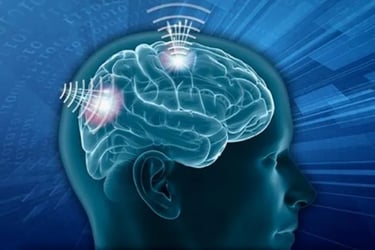
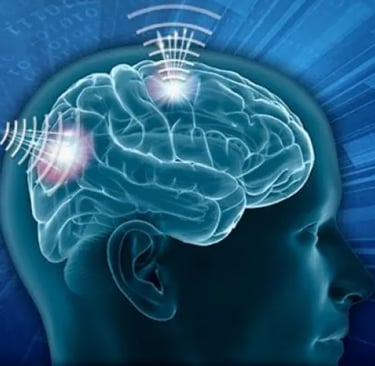
(Six Paths to the Nonsurgical Future of Brain-Machine Interfaces) Conceptual illustration of a wireless brain interface affecting specific brain regions. Advanced programs like DARPA’s N3 are developing non-surgical methods to “read and write” to the brain using external transmitters, potentially enabling remote influence over neural circuits.
Induced Speech, Forced Acts, and Coerced Crimes
One of the most disturbing implications of remote neural control is the possibility of forcing a victim to perform actions or speech against their will — even criminal acts — via direct influence or blackmail. In essence, this crosses from torture into the realm of remote mind control, coercing the target to comply with the tormentor’s demands or face neurological punishment.
Induced Speech: The neural basis of speech involves coordinated activity in the brain’s language centers (e.g., Broca’s area in the frontal lobe for speech production and Wernicke’s area for language comprehension) and in the motor cortex regions that control the vocal tract muscles. If an intruder can stimulate these areas in the correct sequence, they could theoretically make the victim utter words or phrases. This could be done in a brute-force way by driving the larynx, tongue, and lip muscles through their motor neurons — effectively treating the person’s speech apparatus like a teleoperated speaker. Another approach is more subtle: implanting thoughts or inner speech that the victim then vocalizes semi-voluntarily. For example, a technology called “silent sound” or ultrasound neural modulation might induce specific brainwave patterns that correspond to internal verbalizations. The victim might “hear” a thought that is not their own (like an intrusive command) and then unknowingly speak it. There have been reports (though not officially verified) of military experiments on Electronic Telepathy, where EEG signals of speech are translated to another person’s brain via TMS, causing the second person to hear the first person’s thoughts. If refined, an operator could compose a sentence (“I will bomb the building tomorrow”) and inject it into the target’s mind repeatedly. Under duress and confusion, the target may eventually speak it aloud, seemingly confessing or threatening something they never intended. Such induced speech could be used to blackmail the victim (“we have you on recording making a terroristic threat”) or to create false evidence that leads to their arrest, thus silencing them.
Forced Movements and Criminal Acts: External control of motor functions can directly force someone to carry out physical acts. In a nightmare scenario, a skilled neuro-controller could effectively puppet a person into committing a crime. The person might retain awareness but have no control as their body moves on its own. For instance, a targeted individual might find themselves compelled to assault a loved one; their own hands move to strike while they mentally scream to stop. A more sophisticated method might not fully puppeteer the action but rather use brain stimulation to bias the person’s decision-making. Stimulating certain brain regions can alter judgment and impulse control — for example, disrupting the right temporoparietal junction with magnets has been shown to sway moral judgments. In one study, TMS over the TPJ made subjects more likely to judge harmful actions as acceptable by impairing their ability to consider intent (Moral judgments can be altered … by magnets | MIT News | Massachusetts Institute of Technology). Similarly, stimulation of the dorsolateral prefrontal cortex can affect risk-taking and compliance. A malicious actor could target these cognitive control regions to lower the victim’s inhibitions or amplify aggressive impulses. Combined with hallucinated justifications (e.g. making the victim perceive the target of violence as a threat via false sensory input), the tormentor could manipulate the victim into initiating an atrocity. Unlike pure puppeteering, this method blurs the line of responsibility, potentially leaving the victim to take the blame.
Coercion and Blackmail: Direct brain control provides the stick; psychological manipulation provides the carrot. An adversary could use the constant threat of unbearable pain or neurological collapse to blackmail the target into compliance. For example, the victim might be told (via an inner voice or other means), “We can make you kill your friend. If you don’t do exactly as we say — if you even think of disobeying — we will take over your body.” The victim, having already experienced episodes of lost control or agony at the push of a button, is likely to believe these threats. This could coerce them into willingly doing the adversary’s bidding in hopes of avoiding worse outcomes. Historical mind control programs like MK-Ultra sought to break individuals and reprogram them through drugs and trauma; a neural torture system could do this far more precisely by targeting the biological substrates of decision and emotion. By alternating horrific punishment (e.g. inducing a heart attack-like pain) with periods of relief when the victim obeys, the controller can create Pavlovian conditioning. Over time, the victim’s will may erode, until they reflexively follow commands to avoid trigger of their implanted pain.
One could envision a victim being forced to commit a crime such as espionage, sabotage, or even murder, all while under near-total remote control or duress. After the deed, the controller might release them from influence, leaving the individual horrified at what they’ve done. The ultimate cruelty is that the victim might then be punished by society for those crimes, completing the goal of the tormentor without ever revealing the true perpetrator. This induced action mechanism is not entirely fanciful: neuroscientists have demonstrated “brain-to-brain” communication in humans (albeit for benign tasks), and brain stimulators can elicit complex behaviors in lab animals. For instance, experiments have used brain implants to make rodents run through mazes via remote control, nicknamed “robo-rats.” Replacing implants with nanotech and magnets simply makes the method less detectable.
Conclusion: From Theory to Plausibility
The idea of remote torture and control of a human being — turning the body and mind into an unwilling puppet — reads like science fiction or the paranoid grievances of “targeted individuals.” Indeed, TIs often describe experiences of voice-to-skull harassment, involuntary body movements, artificial pain, and mind reading that align with the mechanisms discussed (Gangstalking and Targeted Individuals — ISD) (Gangstalking and Targeted Individuals — ISD). While many such accounts lack concrete evidence, the rapid progress in neurotechnology lends a chilling plausibility to these claims. We now have demonstrated building blocks: noninvasive brain decoders that can read thoughts (AI makes non-invasive mind-reading possible by turning thoughts into text | Artificial intelligence (AI) | The Guardian), directed energy devices that induce pain and sonic hallucinations (Havana syndrome: ‘directed’ radio frequency likely cause of illness — report | US foreign policy | The Guardian) (Microwave auditory effect — Wikipedia), and wireless nanoparticle systems that can activate neural circuits remotely (Magnetoelectric nanodiscs offer remote brain stimulation without implants or genetic modification). It is no longer a question of “Could this happen?” — the pieces exist. It is instead a question of integration and intent: “Has someone put the pieces together to create an actual system of no-touch torture?”
In military research, for now, the intent is focused on therapy, augmentation, and nonlethal weapons for crowd control (like sonic beams or microwave pain beams). However, history teaches that any technology can be repurposed as a weapon. The convergence of brain science and weapons development — often termed neurowarfare or psychotronic warfare — is an emerging domain. Nations are likely researching how to defend against or employ such methods. The public evidence is scant, often buried in defense contracts and obscure research papers, but enough has trickled out to sketch a picture of what’s possible. DARPA’s N3 program and related efforts provided proof-of-concept that multi-channel brain links are feasible without implants (Next-Generation Nonsurgical Neurotechnology). If a clandestine group or state actor managed to acquire or advance this technology, the result might well be the kind of remote torture chamber TIs describe.
In summary, we explored how psychological torture techniques like mock executions or relentless threats could be delivered by reacting to a victim’s own thoughts in real time, thanks to brain-monitoring capabilities. We saw how physical tortures — pain, suffocation, muscle exhaustion — could be mimicked by seizing control of the victim’s nervous system via remote neural stimulators (magnetoelectric nanoparticles, ultrasonic interfaces, etc.). We discussed DARPA’s role in pushing the envelope with projects like N3 and neural dust, which seek to open the brain to remote access (DARPA Awards $9.8M To Rice University For Next-Gen Nonsurgical Neurotechnology Program — nta.org) (Neural dust — Wikipedia), potentially allowing a hostile takeover of motor and autonomic functions (even the heart, via brainstem/vagus manipulation (The Vagus Nerve: A Key Player in Your Health and Well-Being)). Finally, we considered the dire implications: speech and actions coerced through neural leverage, up to forcing a person to commit crimes under remote command. Each element is grounded in current science, stitched together here to illuminate a dark theoretical possibility.
It is critical to maintain a scientific skepticism — extraordinary claims require extraordinary evidence. We do not assert that such torture programs are definitively operational today, only that from a technical perspective, they are plausible and perhaps closer to reality than we wish to believe. As neuroscience marches forward, safeguards and ethics must keep pace to prevent abuse of these powerful tools. The specter of remote neural torture should motivate transparency and defensive research, to ensure that the tools to heal and enhance are not turned into instruments of unimaginable suffering.
Sources: References are included inline to relevant literature, military reports, and scientific findings that support the feasibility of the described concepts. These include DARPA program announcements (Next-Generation Nonsurgical Neurotechnology) (Six Paths to the Nonsurgical Future of Brain-Machine Interfaces), neuroscience studies on brain decoding (AI makes non-invasive mind-reading possible by turning thoughts into text | Artificial intelligence (AI) | The Guardian) and stimulation (Magnetoelectric nanodiscs offer remote brain stimulation without implants or genetic modification), as well as documented effects of directed energy on humans (Havana syndrome: ‘directed’ radio frequency likely cause of illness — report | US foreign policy | The Guardian) and known psychological torture methods (The Neurobiology of Psychological Torture — The Center for the Study of Human Rights in the Americas (CSHRA)). Each citation points to the source material substantiating the preceding claim or data.
Daniel is a TI. That is clear from his article: My Final Warning
"The Personal Warning I’ve fought this thing for over two decades. Ever since I first realized my memories were being tampered with. Since the moment I felt people reacting to thoughts I hadn’t even spoken aloud. Since I knew that something had crossed timelines into ours — and left a trail of glitches behind."
Marked as Dangerous: An Investigative Analysis of
No-touch Torture Methods on Targeted Individuals
A thesis submitted in partial fulfillment of the requirements
for the degree of Master of Science in Psychology
Joyeux Noel Womac
Department of Graduate Psychology
Purdue University Global 2022
EXCERPTS:
"A published scholarly article presented details (Jaiswal, 2022) on mind control technology and psychotronic weapons with some differences from the current evaluation. Out of 296 male and female responses, 71.29% completed a college degree, age 31-40 (29.39%), the torture year began between 1970 through 2008 was 1981-1990 (13.51%), age, when they became aware of the torture, was 21-30 (31.08%). Individuals discussed the ailments of toothaches, red eyes, headaches, direct pain, or occasional rudeness from a stranger (gangstalking/organized stalking) with continued bad luck. These technological advancements implied a person’s nervous system, subconscious, and conscious mind was hackable to cause trauma. The statistics gave rise to the reality of targeting/no-touch torture in Jaiswal’s article."
"It depicted an application called the New World Order (NWO) Tortureware 6.66 (recently upgraded) that showcased different commands against the person’s free will (Jaiswal, 2022). The mind commands used were these: emotion clone, voice to skull, memory kill, idea kill, idea program, hologram image, view through eyes, listen through ears, read thoughts, force speech, and force hate. The body commands were as followed: electric shock, power itch, limb move, collapse, fatigue, force sleep, force wake, sickness, high heat, fast pulse, and orgasm.
The software advertised online demonstrated the misuse of brain-computer interface and artificial intelligence applications designed to disrupt or manipulate people and outcomes en masse while under global surveillance. Even Perez-Sales (2022) referenced lethal and non-lethal weapons, media and internet usage, and artificial intelligence (AI) as a link to contemporary torture in his publication. The chief concern was knowing AI’s capacity to be sentient. Some remote technological manipulations could cause interference with elections, employment, sporting events, stock exchange, decision making, pregnancies, active shootings/mass murder, human trafficking, addictions, community/domestic violence, climate issues, and prevent investigations or convictions."
"Remedies:
Several remedies might resolve the stigma and disparate treatment of the victims and increase public education on remote technologies/operations because anyone can be targeted. As background, the American Psychiatric Association Diagnostic Statistical Manual (DSM) evolved from collecting a census with psychiatric hospitals and the U.S. Army manual in the 1950s to consolidate common psychological behaviors (Gorwitz, 1974). The DSM, its subsequent versions, and the International Classification of Diseases (maintained by the World Health Organization) left out bioeffects of military-grade weapons systems and technologies in their studies throughout the decades. A historical and current record analysis may reconcile the knowledge deficit between technology and trauma-related injuries.
A primary goal would be to build up victim-centric services, alliances, outreach programs, workshops, presentations, demonstrations, and speaking engagements to advocate no-touch torture awareness. These also include psychological and physical therapy and provide subject matter expert referrals to build cases. The practitioners could gain proficiencies in cognitive, biological, chemical, and electronic warfare, information operations, and esoteric science as it applied to trauma and gain cultural competency. Finally, collaborate with experts to conduct peer-reviewed scholarly research supporting targeted individuals as victims of terrorism, torture, and human trafficking would be a start."
https://purdueglobal.dspacedirect.org/server/api/core/bitstreams/6ebffc6e-2298-4a43-91e2-3044c6776e96/content
Gangstalking and Targeted Individuals
By: Cody Zoschak and Kevin D. Reyes
https://www.isdglobal.org/explainers/gangstalking-and-targeted-individuals/
‘Targeted individuals’ (TIs) are self-identified individuals who believe they are victims of constant group stalking, monitoring, and harassment (i.e. “gangstalking”) by shadowy adversaries, most commonly government agents. TIs generally believe that these adversaries use physical surveillance as well as fantastic forms of electronic surveillance such as microwave technology. [The FISA Court defines who TIs are, that's where they are offiically put into the program.]
TIs have committed at least four mass shootings or acts of violence in the United States since 2013. While a number of TIs have harassed family members or other acquaintances, the delusions held by TIs have led them to target strangers on several occasions, most notably the 2013 Navy Yard shooting which killed 12 people. [The shootings were in response to their torture.]
The link between mental illness and violence is not unique to TIs, but they are distinguished by the degree to which they congregate and organize on online platforms. These communities are insular and serve to reinforce their delusions. This also creates the risk that social media groups affiliated with TIs could be exploited by extremist groups for their own agendas. [Linking TI's and mental illness is what the perpetrators in the American government want to discount TI witness testimony and allow the program to keep on torturing and killing.]
What do Targeted Individuals believe?
The basic belief of TIs is that they are being harassed by some entity for an unknown reason. [ Most TI's know why they are being tortured.] This alleged harassment most often takes the form of ‘gangstalking’ or mass surveillance. TIs will often describe bizarre, highly improbable, and science fiction-like situations. According to social media posts from self-identified TIs, these situations include:
24/7 surveillance by nearly everyone around them;
Physical attacks, including poisonings;
Electronic surveillance and hacking;
Targeted noise harassment;
Surgical implantation of microchips for tracking;
Directed energy weapons (DEWs), extremely low-frequency (ELF) radiation, psychotronic weapons, or “voice to skull” (V2K) technologies to broadcast sounds into TIs’ minds, mind control them, and/or remotely control their body;
The alleged perpetrators of gangstalking – often referred to by TIs as “perps” – are typically believed to be government, military, or law enforcement agencies; medical practitioners (e.g. doctors, psychiatrists); financial institutions; private businesses (e.g. insurance and pharmaceutical companies); media and the press; family, friends, and neighbors; and strangers. As one study noted, TIs “are unable to identify a single person responsible for their persecution and experience it as a widely distributed and coordinated effort.”
There is significant evidence that TIs are suffering from mental illness, but there has been insufficient study to provide further definition. Of the small sample of peer-reviewed literature on the subject, for example, a study published in the Journal of Forensic Psychiatry & Psychology (2015) examined a sample of 128 individuals who claimed to be the subject of gangstalking. The authors determined that all 128 cases of self-reported gangstalking in the study were “highly likely to have been delusional,” as defined by the Diagnostic and Statistical Manual of Mental Disorders (DSM-V), an industry standard in mental health. However, when they are labeled as mentally ill on the internet or receive clinical diagnoses of psychiatric illness, TIs tend to reject this by arguing that their appearance of mental illness is merely a goal of their gangstalkers.
Despite being driven to desperation by their alleged tormentors, the vast majority of TIs do not take violent action or express violent rhetoric. In addition to their inability to name a single person responsible for their torment, TIs are also rarely able to articulate a reason why they are being targeted. Despite their belief that the government or military is targeting them and destroying their lives, there is surprisingly little anti-government rhetoric in TI communities and little to no overlap with anti-government extremist groups.
Mass shootings by TIs (or possible TIs)
Washington, DC (2013): In one of the most prominent shootings by a TI, Aaron Alexis killed 12 and injured three others at the Washington Navy Yard in September 2013. Alexis, a Navy veteran who had been working as a contractor at the Navy Yard, had been suffering from documented issues consistent with those of a TI for at least several months before the shooting.
In August 2013, he filed a police report in Rhode Island claiming that he was under surveillance. In a separate incident, he disassembled a hotel bed because he believed somebody was hiding underneath it. Later that month, he was treated for insomnia by two Department of Veterans Affairs doctors. During treatment, he was described as lucid and stated that he had no desire to harm others. Other reports indicated that he believed a chip had been implanted in his head. Most notably, Alexis used a shotgun on which he had etched “my ELF [see ‘What do Targeted Individuals believe?’, above],” “end to the torment,” “not what y’all say,” and “better off this way.” The director of People Against Covert Torture & Surveillance International (PACTS International), a support group for self-identified TIs, also claimed that he had exchanged emails with Alexis.
Figure 1: Photo of shotgun used by Alexis during Navy Yard shooting. Etched into the stock are the phrases “better off this way” and “my ELF Weapon”.
St. Joseph, Louisiana (2013): Fuaed Abdo Ahmed held a number of bank customers in St. Joseph, Louisiana, hostage with the demand that authorities remove what he claimed was a listening device they had implanted in his head. Ahmed was shot and killed after shooting at officers. According to law enforcement reporting, Ahmed was taking medication to treat schizophrenia. His family claimed that he had experimented with bath salts and other “hard drugs” while enrolled at Louisiana State University.
Ahmed left behind a Facebook page and a variety of handwritten notes, none of which appear to have referenced or were linked to TI groups. It cannot be confirmed that Ahmed considered himself a TI despite his statements during the attack. Given the robust presence of TI pages on Facebook, it would be unusual for a TI with an active Facebook profile to not interact with any such pages.
Tallahassee, Florida (2014): Myron May, a self-identified TI, shot three people at a Florida State University (FSU) library before being killed by police in 2014. May was a graduate of FSU who abandoned a successful legal career after he began suspecting that he was the target of a large-scale coordinated surveillance campaign. For several years, he lived a transient lifestyle and began posting on social media about his experiences as a TI. It is unclear why May chose to carry out a shooting or the significance of the target; a series of letters he wrote to friends and relatives before the attack indicate that the attack was premeditated and that he did not intend to survive.
His personal papers included a letter titled “My Experiences as a Targeted Individual” documenting alleged harassment. The five-page document includes roughly a year of increasingly extreme accusations including local police that refuse to take a report, a ten-car surveillance team, forced eviction and the co-opting of an old friend to participate in the harassment. May also listed several tactics he claimed are used against TIs.
Figure 2: Excerpt from May’s personal papers.
Baton Rouge, Louisiana (2016): In July 2016, Gavin Eugene Long targeted six police officers in Baton Rouge, Louisiana, killing four before being shot and killed himself. Long’s digital footprint included a melange of ideological influences including Black nationalism, sovereign citizen ideology and anti-government beliefs. These influences received the most attention at the time. The attack was deemed part of a string of incidents in the summer of 2016 motivated by Black nationalism or anti-police sentiment after police shot several unarmed Black men in the US. However, reporting and Long’s social media provides evidence that he also identified as a TI.
On Facebook and other social media platforms, Long expressed his belief that he was being stalked. On his blog, he accused the police of being responsible for this harassment, stating that “99% of gang-stalking is carried out by police.” As with Aaron Alexis, Long also interacted with PACTS International, adding himself to their buddy list in 2015 before deactivating his account a month later. Long left a suicide note in which he railed against corrupt police officers and their targeting of Black Americans.
Rochester Hills, Michigan (2024): Michael William Nash shot and injured nine people at the Brooklands Plaza Splash Pad in Rochester Hills, Michigan, in June 2024. He was later found dead from an apparently self-inflicted gunshot wound at his residence in Shelby Township, Michigan. According to Oakland County Sheriff Michael Bouchard, Nash “believed the government was tracking him.” Other reporting stated that “Nash’s mother informed law enforcement after the shooting that Nash had been suffering with paranoia that the government was watching him.”
Nash did not leave a social media footprint or other writings that explicitly identified him as a TI, but the reporting from law enforcement and his relatives indicate that he exhibited many of the characteristics of one. Nash’s motivation for the attack remains unknown and it is unclear whether his likely status as a TI influenced his decisions.
Online communities and activity
TIs have formed large communities on a variety of social media sites and forums[i]. Though some estimate that there are “conservatively” more than 10,000 self-described TIs, it is difficult to validate this number through social media analysis as TIs often congregate in small groups and use multiple accounts across mainstream and alt-tech platforms.
A review by ISD of TI and gangstalking on Reddit found numerous related subreddits – one of which has over 60,000 members. Data from Reddit shows that users who post on TI/gangstalking subreddits commonly post on subreddits related to conspiracy theories (e.g. Illuminati, New World Order, reptilians) and mental health issues (e.g. bipolar disorder, schizophrenia). ISD also found at least ten TI/gangstalking Facebook pages with more than 25,000 members.
Some TIs have also created their own web pages or group organizations that seek to encourage awareness of the phenomenon, disseminate theories on surveillance, and organize lawsuits against those they believe are harassing them. One website, for example, was found by ISD to have nearly 50,000 monthly visits in mid-2024. Dozens of self-published books are also available on Amazon to help self-identified TIs understand and deal with their perceived torment.
A popular form of TI content involves TIs filming their gangstalking and uploading their encounters on video-sharing platforms. Searches for key terms on YouTube and TikTok, for example, show thousands of videos by TIs, many with tens of thousands of views and likes. These videos usually show the TI capturing “incontrovertible evidence” of their gangstalkers (i.e. perps), which includes strangers in public doing ordinary things such as walking and driving.
While these online communities may serve as a way for TIs to support each other, they may also reinforce their beliefs and pull them into other conspiracy theories (as highlighted by our Reddit analysis mentioned above). Additionally, not all the activity on these forums and pages consists of an echo chamber. Some users on the forums, for example, post to offer countervailing evidence and challenge TIs’ beliefs. These users, some of whom are former TIs, are rarely confrontational, but rather sympathetic. TI communities online are often quite insular, with little effort to advertise or find new members. Due to this, non-TIs do not often stumble into TI fora, reinforcing the echo chamber and reducing the level of harassment or debate that is often observed in online spaces. Conspiracy theorists are a notable exception, however their proclivity to accept controversial and outlandish ideas rarely creates confrontation.
[i] ISD has chosen not to link to any of these sites or forums.
Further Reading:
Joe Pierre, “Gang Stalking: Real-Life Harassment or Textbook Paranoia?” Psychology Today, October 20, 2020, https://www.psychologytoday.com/intl/blog/psych-unseen/202010/gang-stalking-real-life-harassment-or-textbook-paranoia
Chrstine M. Sarteschi, “Mass Murder, Targeted Individuals, and Gang-Stalking: Exploring the Connection,” Violence and Gender, vol. 5, no. 1 (March 2018), https://www.liebertpub.com/doi/10.1089/vio.2017.0022
Lorraine P. Sheridan and David V. James, “Complaints of Group-Stalking (‘Gang-Stalking’): An Exploratory Study of Their Nature and Impact on Complainants,” Journal of Forensic Psychiatry and Psychology, vol. 26, no. 5 (2015), https://www.tandfonline.com/doi/full/10.1080/14789949.2015.1054857
Lorraine Sheridan, David V. James, and Jayden Roth, “The Phenomenology of Group Stalking (‘Gang-Stalking’): A Content Analysis of Subjective Experiences,” International Journal of Environmental Research and Public Health, vol. 17, no. 7 (April 2020), https://www.mdpi.com/1660-4601/17/7/2506
Andrew Lustig et al., “Linguistic Analysis of Online Communication About a Novel Persecutory Belief System (Gangstalking): Mixed Methods Study,” Journal of Medical Internet Research, vol. 23, no. 3 (March 2021), https://www.jmir.org/2021/3/e25722/
Andrew Lustig et al., “Social Semiotics of Gangstalking Evidence Videos on YouTube: Multimodal Discourse Analysis of a Novel Persecutory Belief System,” JMIR Mental Health, vol. 8, no. 10 (October 2021), https://mental.jmir.org/2021/10/e30311/
Vice, “Meet the Targeted Individual Community,” YouTube video, uploaded May 24, 2017, https://www.youtube.com/watch?v=62s3FinAoC0
Vice, “The Nightmare World of Gangstalking,” YouTube video, uploaded November 7, 2017, https://www.youtube.com/watch?v=5LPS7E-0tuA
Investigating the claims of ‘targeted individuals’ who insist they’re being stalked, tortured
June 2021
BY KIM WHITING
Jack arrived at my office looking like the Hollywood version of a science professor. He was in his late 40s, with slightly unruly, longish hair, a buttoned-up shirt with a pen in the pocket, jeans, and well-made leather shoes.
I asked for his level of education and he told me that he had a PhD in engineering. He went on to say that he’d invented some highly classified technology for a U.S. Department of Defense contractor. He also told me he’d been put on suspension several months prior, due to excessive drinking.
The contractor that had suspended him was paying for his therapy sessions with me and with his psychiatrist. I assumed that his bosses hoped he’d get the help he needed and be able to return to work. If he had indeed invented highly classified technologies, they’d obviously be concerned about his drinking, because he might divulge information while under the influence.
Jack (not his real name) talked about his passion for technology-related projects, and the discussion was fascinating—and plausible—until he told me that he believed the U.S. government was monitoring his every move, via satellite.
He said that’s why he had to stay drunk, to numb his brain against the government’s mental torment.
When I asked Jack what made him believe the government was tracking or surveilling him, he said a government official, who had taken a liking to him, had leaked it to him.
The year was 1988, and I was fresh out of graduate school in the first months of my job as a psychotherapist. But it didn’t take a keen professional eye to see that Jack was dealing with more than alcohol abuse issues.
Still, where did the facts end and the fantasies begin? Did he really work on technology that was sensitive enough to warrant the government’s attention? I assumed, as most of us would, that Jack’s belief that he was under surveillance was a delusion, as was the “government official” whistleblower who supposedly exposed the secret.
But could I be wrong?
The U.S. government spends a mind-blowing amount of money on the development of technology and weaponry designed to protect our country and put us ahead in “the game.” Maybe Jack and other inventors like him really were being monitored, to ensure they weren’t leaking secrets or working for the “other side.”
Within a month of his intake, Jack was on antipsychotic medication and said he no longer felt so tormented. He did continue to believe that he was being watched, however. While on medication, he described the alleged monitoring as an unpleasant, but not unbearable aspect of working in a highly classified environment.
Still, Jack didn’t always take his medication. When off his meds he again felt as if he was being tortured by surveillance and now believed that his psychiatrist and I were in on the conspiracy—that we were medicating him in order to make him susceptible to the government’s spying. At these times he would nearly drink himself into a stupor, end up in a psychiatric hospital where he’d again be stabilized on medication, and then repeat the cycle.
Jack was a good man, an intelligent man who was often so tormented that he wanted to die, and who never rose above discomfort. My heart hurt for him.
* * *
When I’ve worked with clients like Jack, I’ve tried to give them the benefit of the doubt, because sometimes it seems there’s a very thin line between sanity and insanity.
Jack’s claims were similar to people today who call themselves “Targeted Individuals,” or “TIs.” It’s believed that there are thousands of TIs across the globe. They include people from all walks of life—doctors, lawyers, engineers, military service personnel, artists, housewives—potentially anyone.
In the past couple of decades, many have found solace and solidarity by sharing their stories in online support and chat groups. (This, despite the fact that many TIs also claim they’re being monitored via computer.) They post videos on YouTube and have self-published dozens of books, with titles like My Life Changed Forever and Tortured in America. Some believe “the government” or “the military” is behind their predicament. Others blame aliens, strangers, or any number of other sinister culprits.
Despite the significant number of TIs, there are few substantive studies on the subject. Those that have been done conclude that TIs are most likely paranoid, delusional, psychotic. In terms of studies on TIs, there is little to be found that gives their stories of mind control and harassment any credence.
According to many of those writing in TI blogs, “the government” engages in invasive mental torture for the purpose of research that will not only give it the upper hand in war, but ultimately give it total mental control of the masses. They say they’re being fed harmful, hurtful and painful thoughts to make them appear delusional—so that no one will give their claims credibility and conclude they’re simply crazy.
Taking a deeper look into the claims of TIs is like traveling down Alice in Wonderland’s rabbit hole—a confusing, sometimes fantastical ride in which it’s often hard to discern truth from conspiracy theories, facts from fiction. Plausible governmental motives, historical governmental misbehaviors, and documented atrocities that make mind control seem possible can be found. There is strong evidence of technological advances that, in the wrong hands, could truly harm and manipulate individuals, as well as large swaths of the general population.
Recent events in the news raise even more questions. Specifically, revelations that U.S. officials are concerned foreign adversaries may be aiming microwave-radiation and other energy-emitting devices at Americans, in order to collect intelligence from their electronic devices—and to harm them—only serve to deepen my concerns. More on this a bit later.
Karen is a middle-aged White woman living in the Midwest, a married mother who’s had a long, successful career in public relations. Her case first came to my attention several years ago. She would appear to be “normal” to anyone she passes on the street, or with whom she might engage in superficial pleasantries. But Karen (not her real name) also believes the government is stalking and mentally torturing her via an array of techniques. She believes she’s just a small part of a much broader secret program, one that involves what she calls the U.S. government’s ongoing “victimization” of innocent and unknowing citizens.
“I’ve been under surveillance by the NSA [National Security Agency] for at least a year, and possibly longer” she says. “More frightening than that is the fact that the electricity in my apartment has been tampered with, causing me low-level shocks. I’m also being burned at night by what I believe to be one of the new directed-energy weapons or DEWS.” Karen says DEWS are “invisible, soundless weapons, such as radiation, that emit highly focused energy, transferring that energy to a target to damage it.”
Karen says that one of the residents in her building is a military contractor specializing in electronics. “For at least a year, he was the only person to have access to the empty unit next to mine,” she claims. “That’s where I believe the surveillance and harassment is taking place.”
She believes her email address was included on a secret list that supposedly identified WikiLeaks’ financial supporters. “I think I gave a total of $150 to them,” she says. “My crime is that I practiced what I believed were my First Amendment rights. It’s terrifying knowing that I’m being targeted because of this.”
Karen says she’s written to numerous members of Congress and civil liberties groups—all to no avail. “Why won’t they investigate these claims?” she asks. “The situation is escalating. I fear for my future and my family’s future.”
Karen points to information published by the American Civil Liberties Union several years ago, in which the ACLU essentially acknowledges the claims of targeted individuals.
It reads, in part, “In response to a Freedom of Information Act lawsuit filed by the ACLU and Yale Law School’s Media Freedom and Information Access Clinic, the CIA has released a slew of documents concerning CIA surveillance.”
Some highlights from the documents include:
A key CIA regulation—titled AR 2-2—governs the conduct of the CIA’s activities, which include domestic intelligence collection.
AR 2-2, which has never been publicly released before, includes rules governing a wide range of activities, including surveillance of U.S. persons, human experimentation, contracts with academic institutions, relations with journalists and staff of U.S. news media, and relations with clergy and missionaries.”
“Of course, no one believes me,” Karen says. “My husband wants desperately for this to be a mental health issue instead of reality,” she continues. “He says, ‘You can do something if it’s mental illness—what options do you have if it’s not?’ He’s ready to run—and a part of me wants him to because he refuses to believe me! I am most concerned for my children. They’re the most important things to me and I fear being hurt and having them lose their mother.”
Karen has taken dozens of photos to prove that her claims are true. A few of them show overnight shipping labels on boxes, sent to one of her neighbors. She says she’s traced the origin of the boxes to government and military websites.
Another photo, she says, is of a smoke detector that was installed in her apartment building “about the time I started to be shocked.” One picture, she says, “clearly shows electric coil being fed through a hole in the ceiling and added to the electrical box of my unit.”
As was the case with Jack, Karen’s stories make me wonder. On one hand, everything she says seems straight out of a spy novel—or the movie A Beautiful Mind. Yet she comes across as coherent and self-aware. And while it’s not unheard of for people to develop mental illness later in life, it’s far more common to see the onset of delusional symptoms in the late teens and early 20s.
A major life stressor is often the reason for the onset of mental illness as one ages. Karen, however, can’t cite a major event or calamity before her TI experiences began. And my client Jack, who was in his late 40s, reported a relatively low-stress life before his symptoms emerged.
A woman with a warm and sunny demeanor, Sue (not her real name), is a 67-year-old White married woman. Before retiring several years ago to care for her ailing mother, Sue worked within various departments of a West Coast state government for almost 30 years. She and her husband have been together 26 years.
In 2018, in her early 60s, Sue says she began experiencing what she describes as “gang-stalking surveillance” and, like Karen, reports feeling as if her body is being “burned.” Sue calls the sensation “direct energy weapon torture” and she believes those responsible for this harassment are Native American tribal entities, in league with the U.S. Department of Homeland Security.
Like Karen, Sue describes being surveilled and then tortured. For Sue, she says it began with a well-dressed man (with a patch on his jacket that she recognized as the name of a motorcycle gang) who approached her at a concert. She explains, “I was dressed casually and shouldn’t have stood out, but apparently I did. My husband said, ‘That man is circling you like a shark.’”
Sue says the man eventually touched her on the shoulder, leaned in, and demanded that she speak to him alone. “I ignored him and turned back around. But he didn’t leave. He must have followed us home, because we later realized he knew where we lived.”
Sue says she and her husband started seeing the man at a nearby golf course, or revving his motorcycle in front of their house. She says, “He’d never say anything to us, he’d just be there.”
Soon, Sue reports, there were other strange men loitering in her presence. “They used drones around our house, sending them right outside our large back windows,” she explains. “They burned out some of our appliances. They controlled our air conditioning, turning it on and off, and they turned the volume on our television up or down. Anything electrical, they can do.”
Sue says her husband has been “very supportive throughout this ordeal.” And he backs her up.
Her husband says, “It’s been terrible because there’s nothing I can do about it. I see the burns on her body. They’re there all the time, all over her body. She’s also got little pinpoint burn marks on her. She’ll cry out in pain at times.”
He continues, “When this started, I began seeing guys in vehicles or on motorcycles. The guys on motorcycles would rev their engines in front of our house. I didn’t see the people in the cars, but I’d see the same cars repeatedly. And there were men who looked into our house, about 100 yards away on the golf course behind our house, and they’d stay there for 5-6 hours. We called the police, but they said there really wasn’t anything they could do about it. They’ve burned out the main circuit board on the fridge, our microwave, and possibly our dryer. They cause our light circuits to go brighter or dimmer–any smart lightbulb they can manipulate remotely.”
“I see Sue’s sleeplessness,” her husband explains. “It’s every night. And our furniture noticeably vibrates in the night. Sometimes it’s bad enough that she cries in pain. Her tongue gets swollen several times throughout the day and night. Her right breast also got smaller over the course of a few months.”
Sue continues, “One day I was raped electronically. This is an experience that many TI females report, which involves being electronically burned and ‘stabbed’ vaginally. They started using directed energy on me on a regular basis. They burn the bottom of my feet and when they direct energy at my stomach, it feels like a burning volcano and my stomach swells. When directed at my head, I feel like it’s got a vise on it, and it burns. I almost continuously have marks on my body that look like burns. What they’re doing to me makes my ankles swell and disfigure and I often have sores on the soles of my feet. Sometimes I’m attacked non-stop. They dismantle your physical being. My mental state is strong because that’s who I am, but someone not as strong would fall apart. They try to make people crazy.”
Sue says she and her husband tried moving away, but discovered there was no escape. “They can get to you wherever you go,” says her husband.
“My tormentors work in shifts,” Sue claims, “so for about 15 minutes every eight hours, I’m free from attack. Also, when I’m with friends I often feel some relief. But sometimes it happens even then. One day I was with my best friend and we were standing in our kitchen and I said, “They’re attacking right now’ and she said, ‘How do you know?’ I pointed out that the counter top was vibrating. She felt the counter and said, ‘I can feel it, too!’”
Sue and her husband both believe that the government lures people into this torture with money and other compensation, like paid vacations. Like many TIs, their theory is that the tormentors coordinate through a massive cell phone network and use those same phones to direct microwave energy. According to them (and many Tis), cars can also be adapted with directed energy weapons.
When asked why she believes that she’s being attacked, while her husband is not, Sue says, “The vast majority of TIs are women who are 50 or older. I think this is because older females are easier to break down. They are physically more vulnerable and often more socially isolated because many are no longer in the workplace.”
What comes across most clearly in both Karen and Sue’s stories is their suffering. Their despondency at not being believed seems to be almost as painful as the “burns” they describe
Many of the websites and blogs Karen and other TIs recommend are created or written by people who claim to be scientists, doctors and mental health professionals—but many (if not most) espouse ideas and information that seem to be rooted in science fiction and conspiracy theories, as opposed to actual scientific research and hard evidence. Many are difficult to follow or understand. In TI chat rooms, there are hundreds of posts, most of which (again) seem, in my professional opinion, delusional—and also full of pain.
Here are excerpts of some of the more coherent posts:
I’m a Targeted Individual. The way they work, they use mind reading and virtual technology. Through the mind reading they hear everything you’re thinking. Through virtual technology they see everything you think. Virtual technology can torture and create illusions, so when you hear somebody talking about you it could be illusions.
Everyone on the planet ought to read the book by ex-CIA consultant Dr. Robert Duncan entitled Project: Soul Catcher. My bizarre symptoms matched what he describes in the first few pages. These are: (high decibel) swishing sounds, flickering in my vision, pulsing tinnitus (ringing in the ears). Other things I’m 100 percent sure about: 1) I was microwaved like a piece of meat…and forced to sleep. 2) I was exposed to radiation for months 3) I was gang-stalked. 4) The perps surrounded my apartment by moving into adjacent apartments.
I’ve been targeted since 2007 and I’ve lost everything, except my relationship with my daughter. I do believe they choose people who already are dealing with emotional difficulties and who are struggling through life. But most of what I’m reading is that they go after people who are very successful in their chosen fields.
All they want is to get you to kill yourself or hurt someone. We are their entertainment except we don’t get money or fame. A lot of the things that go wrong in our lives could be just life, or it could be them. In the end there really isn’t anything we can do right now to stop them.
Still struggling to make sense of how TIs come to think and believe as they do, I looked further into Karen’s case.
“I’ve learned how corroded our government is,” she says. “It’s performing widespread experimentation on U.S. citizens with neuro-weapons that are comprised of energies on the radio wave spectrum—microwaves, electromagnetic fields. There are many writings about this, but none in mainstream media.”
Karen claims to have “numerous Bio-MEMS implants that track/torture me.” She says that “telemetry wires” have been inserted into her chest unbeknownst to her, “when I was put under for a different minor surgery.” She had an X-ray image taken of her chest and she says it reveals some kind of foreign obstruction near her rib cage. “These devices give off radio waves that are activated several times a day,” she claims, explaining that the waves could then “relay biological information on me.”
“I’m basically a DARPA lab rat,” she continues. “I’ve been shocked, burned, radiated and poisoned.” She has images purporting to show “dangerous radiation levels in my home” and even says she has “an RFID chip in me” that allows military satellites to follow her for a “black ops campaign.”
Karen referenced many terms I was unfamiliar with, so I did some research to better understand what she was talking about, and here’s what I found:
Black Ops is short for “black operation” and defined as a covert operation by a government, a government agency, or a military organization.
Bio-MEMS can be used to refer to the science and technology of operating at the micro-scale for biological and biomedical applications, which may or may not include electronic or mechanical functions.
Telemetry is an automated communications process by which measurements and other data are collected at remote or inaccessible points and transmitted to receiving equipment for monitoring.
RFID stands for radio frequency identification and is a generic term for technologies that use radio waves to automatically identify people or objects. There are several methods of identification, but the most common is to store a serial number that identifies a person or object, and perhaps other information, on a microchip that is attached to an antenna. RFID have many tracking uses, but a well-known use is the locator chip that can be implanted in pets.
DARPA is the Pentagon’s research arm, the Defense Advanced Research Projects Agency, which has made public in recent years that it’s developing brain implant chips and computer-to-brain communication technology with the aim to “develop an implantable neural interface able to provide unprecedented signal resolution and data-transfer bandwidth between the brain and the digital world.”
DARPA also aims to develop and test “a wireless, fully implantable neural-interface medical device for human clinical use. The device would facilitate the formation of new memories and retrieval of existing ones in individuals who have lost these capacities as a result of traumatic brain injury or neurological disease.”
_________________________________________________________________________________________________
And DARPA’s “Next-Generation Nonsurgical Neurotechnology (N3)” program aims to develop a “safe, portable neural interface system capable of reading from and writing to multiple points in the brain at once. Whereas the most advanced existing neurotechnology requires surgical implantation of electrodes, N3 is pursuing high-resolution technology that works without the requirement for surgery.”
Entrepreneur Elon Musk has taken brain-machine interface technology research to the private sector with his Neurolink company. In a 2019 CNet article, Musk said they’d developed a system to feed thousands of electrical probes into a brain, and hoped to start testing the technology on humans. Said Musk, “And it’s working already in animal tests. A monkey was able to play a computer game with his brain.” In August of 2020, Neurolink livestreamed footage of brain activity in pigs as they received brain chip implants. Neurolink awaits government approval to test the technology on humans.
And so, it could be argued, the technologies that some TIs claim are being used on them do indeed exist, to a degree, or are being heavily researched. Their proponents say they’re being developed for noble and worthwhile purposes. However, it’s also true these advancements could become exceedingly dangerous in the wrong hands, or if used for less than honorable purposes.
Karen, meanwhile, describes some of her more recent experiences as an alleged TI:
“I’ve started getting dizzy while sitting at my computer,” she explains. “I’ve started hearing buzzing, knocking, and whistling sounds in my left ear. I never once doubted that they were coming from a source outside my head.”
Karen says she searched for answers on the internet and discovered information about “the microwave auditory effect,” something she describes as “the whistling, knocking and pinging in the skull that occurs when someone is extremely close to microwave signals.”
Karen says she keeps seeing “beat up old cars with out-of-state license plates” parked directly in front of her apartment. “When they’re there, I’m awakened by the sensation of being cooked. My bones hurt; my eyes cloud, and it didn’t take long to figure out that I was being hit with some new kind of directed-energy weapon (DEW).”
Karen says she called 911 and demanded the cars be removed. “I explained they were serving as platforms for directed-energy weapons. The operators bounced me around to different departments in some sort of twisted game of telephone tag, repeating my request to each new dispatcher in a mocking way. I kept my cool and repeated my request. After being transferred for a third or fourth time, I hung up, but those cars were never there again.”
Karen also says she hears “someone crawling between the floorboards at night,” followed by “heightened electric currents” that fill her apartment. She believes some of the residents in her apartment complex are government agents and “involved in the conspiracy.” Other neighbors, she claims, are “just greedy slobs who want money, tickets to sporting events and household upgrades in exchange for spying and enabling the torture of me. This realization was sickening. My neighbors have become accessories to my attempted murder.”
Karen says the “most extreme abuse happens when I’m alone. I get electrocuted with what I’ve come to realize are manipulated cable, phone and electric lines.” After repeatedly hearing “static noise” on her telephone land line, she says a technician told her that her line was “testing constantly busy” and appeared to have a “recorder” on it. Karen says she disconnected both her phone and computer line as a result.
“They always find another way to reroute the burn in,” Karen explains. “Apparently they call it being ‘boxed in.’ I learned that phrase when I went to an electrical supply store and the guy on duty told me his father worked for the CIA. He said I’m being boxed in and burned by radio waves created from electromagnetic fields. And apparently this wire in my chest acts as an amplifier to the radio waves.”
Karen continues, “It’s what they did to Myron May, the attorney in Florida who shot three people at a university in a desperate attempt to make the media pay attention to what’s going on. But the country’s media is hypnotized or drugged or under the spell of—I don’t know what. God bless Mr. May’s soul.”
* * *
Myron May
Aaron Alexis
Gavin Long
I looked up Myron May. Just as Karen said, in November 2014, 31-year-old May shot and wounded three students (leaving one paralyzed) with a .380 semiautomatic pistol inside a Florida State University library. Daring the responding Tallahassee police officers to kill him, he fired in their direction—and they shot him dead.
An attorney and Florida State graduate, May described himself as a Targeted Individual on social media and told others that he believed government stalkers were harassing and using a directed-energy weapon to hurt him. Police said May was in a paranoia-fueled “state of crisis” at the time of the shootings.
Shortly before his rampage, he sent an email that said, “I’ve been getting hit with the direct energy weapon in my chest all evening. It hurts really bad right now.” He left a voice mail that said, “I am currently being cooked in my chair. I devised a scheme where I was going to expose this once and for all.” May also made several posts on a Facebook page for Targeted Individuals, including one that asked, “Has anyone here ever been encouraged by your handler to kill with a promise of freedom?”
I found there were other cases, eerily similar to that of Myron May.
In September 2013, when 34-year-old Aaron Alexis killed 12 people at the Washington Navy Yard in southeast D.C., he left behind documents in which he claimed the Navy had been attacking his brain using “extremely low frequency” electromagnetic waves. “And to be perfectly honest, that is what has driven me to this,” he wrote. He was killed in a shootout with police.
And then there was 29-year-old Gavin Long, a former Marine who ambushed law enforcement officers in Baton Rouge, Louisiana in July 2016, killing three and injuring three others. Long, who was also killed in a police shootout, had written online that he, too, was a TI and claimed the government had been watching him for 11 years. He appeared to fixate on law enforcement as his persecutors.
Long, Alexis, and May are all Black men, almost the same age, claiming to be victims of electronic attacks by the government (or in Long’s case, police), who say they killed people because of the effects of those attacks. Their crimes were committed within a period of less than three years. Did coverage of Alexis’ attack, along with his claims of government torture, feed the paranoid delusions and impulses of the other two men? Did internet TI groups feed their delusions—or do their claims of electronic attacks have some merit?
* * *
“I now set off metal detectors when I’m not wearing metal,” Karen explains. “I feel pain in my upper left arm at certain odd times. My wrist has developed a permanent swelling. I worked up the nerve to go to a walk-in clinic for an X-ray of my arm. After seeing my x-ray, a radiologist said, “You have something in your arm.”
Karen continues, “It all sounds crazy, I know. But you should look up “COINTELPRO” or “MK-ULTRA” before discounting my experiences.”
And so, there was more research to be done. Here’s what I found:
MK-ULTRA is listed in the Central Intelligence Agency Library under “MK-ULTRA mind control experiments.” According to info I found on that site, “MK-ULTRA came to public light in 1977 as a result of hearings conducted by a Senate committee on intelligence. The operation began in 1953 and was officially halted in 1974. During that time, hundreds of unwitting Americans and Canadians were subjected to LSD, extreme electro-shock therapy and other drug therapy in research undertaken at 80 institutions, including 44 colleges and universities, as well as hospitals, prisons, and pharmaceutical companies.”
According to a 1984 MK-ULTRA segment on CBS-TV’s 60 Minutes, “unwitting subjects were subjected to mind control experiments that left them crippled for life.”
In CIA v. Sims 471 U.S. 159 (1985), the Supreme Court summarized MK-ULTRA as “the research and development of chemical, biological, and radiological materials capable of employment in clandestine operations to control human behavior.”
MK-ULTRA reminded me of an experiment (found in most university psych textbooks) conducted in the 1960s by Stanley Milgram, a professor at Yale University. In his studies, a volunteer who was designated as the “teacher” read out strings of words to his partner, “the learner,” who was hooked up to an electric-shock machine in the other room. Each time the learner made a mistake in repeating the words, the teacher was to deliver a shock of increasing intensity, starting at 15 volts (labeled “slight shock” on the machine) and going all the way up to 450 volts (“danger: severe shock”). Some people stopped the experiment early and wouldn’t comply with the supervisor’s urging to go on, but others continued up to 450 volts, even when the learner screamed in pain. In the most well-known variation of the experiment, a full 65 percent of people went all the way. Participants didn’t know that the shocks and cries of pain weren’t real until after the experiment. Milgrim’s theory was that people, under the direction of an authority figure, would obey just about any order they were given, even to torture—and that is precisely what they did.
Milgram’s experiment makes me wonder, “Would government employees, under the direction of ‘higher ups,’ follow instructions to use technology, even to inflict torture?” The MK-ULTRA experiments point to an answer of “yes.”
As for COINTELPRO, it stands for Counter Intelligence Program, and was a series of covert projects conducted by the FBI beginning in 1956, aimed at surveilling, infiltrating, discrediting and disrupting American political organizations—groups like the Communist Party of the United States, the Ku Klux Klan, the Socialist Workers Party, and the Black Panthers. Then-FBI Director J. Edgar Hoover ordered FBI agents to expose, misdirect, neutralize or eliminate the activities of these movements, and especially their leaders, such as Martin Luther King and Black Panther Party leaders Fred Hampton and Mark Clark, who were shot by Chicago police during what is believed by some to have been an FBI orchestrated operation. According to the FBI website, all COINTELPRO operations ended in 1971.
While these programs and research don’t directly support Karen and other TIs’ claims of governmental mind surveillance and torture, they do show the U.S. as capable of engaging in operations that are underhanded, illegal and tortuous.
In January 2007, The Washington Post tackled the subject with an in-depth article entitled, “Mind Games New on the Internet: a community of people who believe the government is beaming voices into their minds. They may be crazy, but the Pentagon has pursued a weapon that can do just that.”
The Post wrote: “In 1965, according to declassified Defense Department documents, the Pentagon, at the behest of the White House, launched Project Pandora, top-secret research to explore the behavioral and biological effects of low-level microwaves. For approximately four years, the Pentagon conducted secret research: zapping monkeys; exposing unwitting sailors to microwave radiation; and conducting a host of other unusual experiments (a sub-project of Project Pandora was titled Project Bizarre). The results were mixed, and the program was plagued by disagreements and scientific squabbles and Pandora ended in 1970. And with it, the military’s research into so-called non-thermal microwave effects seemed to die out, at least in the unclassified realm.
The article continued: “But there are hints of ongoing research: An academic paper written for the Air Force in the mid-1990s mentions the idea of a weapon that would use sound waves to send words into a person’s head. ‘The signal can…warn the enemy of impending doom, or encourage the enemy to surrender,’ the author concluded.
“In 2002, the Air Force Research Laboratory patented precisely such a technology,” the Post article continued, “using microwaves to send words into someone’s head…In response to a Freedom of Information Act request filed for this article, the Air Force released unclassified documents surrounding that 2002 patent—records that note that the patent was based on human experimentation in October 1994 at the Air Force lab, where scientists were able to transmit phrases into the heads of human subjects, albeit with marginal intelligibility. Research appeared to continue at least through 2002. Where this work has gone since is unclear — the research laboratory, citing classification, refused to discuss it or release other materials.”
* * *
The more I investigated, the more I concluded that some of what Karen and Sue claimed to be experiencing was, if not actually real, then perhaps at least plausible.
I returned to Karen’s descriptions of her ordeal:
“I’m in an electronic prison and my jailers know me better than any person alive. They watch me bathe, relieve myself, crack bad jokes and dance while I’m alone. They read my mind, for God’s sake. They know I’m not violent and that after two and a half years of torture, I still happily chat with strangers, try to stay positive, stop my car to tend to a dying chipmunk. They know better than anyone that I’m a good person.
“I haven’t heard from my brother for a year because he says he just can’t wrap his brain around what I’m telling him. My sister says, ‘You’re just an average, everyday Jane Doe. Why would they do this to you? I mean, why YOU?’
“Dr. Robert Duncan, who claims to have been involved in developing these technologies for the CIA, says these programs are carried out in “game theory”— meaning to the target’s death. Supposedly, there is no way out for me.”
This was the second time Karen had brought up Dr. Robert Duncan. Many of the Targeted Individual blogs pointed to Duncan as the source of their knowledge about secret research and technology. He’s the author of books like How to Tame a Demon: A Short Practical Guide to Organized Intimidation Stalking, Electronic Torture and Mind Control and Project Soul Catcher: Secrets of Cyber and Cybernetic Warfare Revealed.
Robert Duncan, and his books
Duncan claims to have worked on projects for the Department of Defense and the CIA related to artificial intelligence and neuroscience.
When I contacted him for an interview, he thanked me for my interest in Targeted Individuals, but said that he was very busy and only had time for a few very brief questions.
I first asked him about the purpose and intended use of the technology that he says he worked on with the CIA. He responded, “[It’s for] accelerated learning and perhaps a weapon to break the psychology of the enemy.”
Duncan told me that he’s personally talked with around 5,000 Targeted Individuals. When asked what led him to believe that TIs are experiencing something other than paranoid delusions, he told me, “If you have worked on the technologies and studied the abuse of them on the public as long as I have, the patterns become obvious. Many of the TIs’ minds have been trained to become paranoid schizophrenics. In fact, any mental illness can be induced. The weaponized version is called a ‘mind virus.’”
At that point, Duncan said he was too busy to speak further, and when I later emailed him hoping to get answers to a few follow up questions he replied, “Sorry, I’m working on helping to alleviate their suffering. No time for interviews this year.”
* * *
In 2008, WIRED Magazine reported that the United Nations was also taking the possibility of electromagnetic terrorism against people seriously. The article cited a European Symposium that included a session on the social implications of non-lethal weapons, with specific reference to “privacy-invasive remote interrogation and behavioral influence applications. Those who believe they are being targeted are getting a bit of official recognition.”
In a 2009 WIRED article entitled “Court to Defendant: Stop Blasting That Man’s Mind!”, the magazine reported, “Late last year, James Walbert went to court to stop his former business associate from blasting him with mind-altering electromagnetic radiation. Walbert told the Sedgwick County, Kansas panel that Jeremiah Redford threatened him with ‘jolts of radiation’ after a disagreement over a business deal. Later, Walbert said he began feeling electric shock sensations, hearing electronically generated tones, and getting popping and ringing sounds in his ears. On December 30th, the court decided in Walbert’s favor and issued a first-of-its-kind order of protection, banning Redford from using ‘electronic means’ to further harass Walbert.”
The WIRED article continued, “In some legal, policy, and business circles, electromagnetic brain assaults are being taken seriously. Walbert’s cause is supported by Jim Guest, a Republican member of the Missouri House of Representatives. He’s working on proposed legislation to address electronic harassment, including a bill against the forced implantation of RFID chips.”
(This bill appears to have made it to a rules committee in Missouri but no further action was ever taken by lawmakers. However, a narrower ban on forcing implants as a condition of employment was later passed in the state.)
Walbert maintained that a doctor, experienced in reading MRIs, confirmed to him that a foreign body—most likely a micro-chip—was present in his body. That doctor, Dr. John Hall, is an anesthesiologist in San Antonio, Texas, and he confirmed that assertion when contacted by The Reporters Inc.
“Many TIs think they’ve got chips in their bodies,” Hall says. “But chips aren’t necessary, and newly targeted individuals will waste a lot of time and money trying to get people to find chips in them.” He adds, “The government can conduct the torture without chips.”
In 2014, Hall authored a book entitled Guinea Pigs: Technologies of Control. The synopsis reads, in part, “For years the federal government has sought to remotely control human behavior…the American public has been unwitting guinea pigs in a multitude of non-consensually performed experiments that have continued into the 21st century.”
John Hall, and his books
Hall believes that, over the course of the last 15 years, there has been a sharp rise in the number of people coming forward with complaints of this experimentation, specifically with electromagnetic weapons. He maintains these weapons are designed to target a human being’s central nervous system.
In fact, Hall says that because so many people around the world now claim to be victims of this experimentation, it can no longer be attributed only to delusional disorders, schizophrenia, or any other mental illness.
Hall says the safeguards and laws against experimenting on United States citizens without their consent, referred to in the Federal Policy for the Protection of Human Subjects (‘Common Rule’) are lacking, and the policy contains several loopholes for the allowance of non-consensual experimentation, mostly by intelligence agencies.
Hall told The Reporters Inc., “The root reason for this is experimentation is more than likely for the government to ultimately have control of us all, because almost none of these people have reason to be targeted. A few have been former whistleblowers, but most are normal everyday folks.”
Hall continued; “Over the course of a decade I have examined a couple thousand targeted individuals and every morning there are probably about 10 new victims on my voicemail. I now discourage them from coming into my office for that issue because my office is for anesthesia, pain management and stem cell work and my schedule is full. If I were handling targeted individual cases as well, it would be unmanageable.”’
Hall reports that almost all targeted individuals report the same pattern:
They say they’re being stalked
They claim to hear voices that sound like they’re from an outside source
The believe they’re being internally burned
Hall believes the burning sensation is a direct result of remotely-controlled electrical waves. In his experience, the majority of people claiming to be TIs are over 35-years- old, female, and single or divorced.
As for the medical experts who insist TIs are simply mentally ill, Hall counters, “If I hadn’t been presented with thousands of the same complaints, I would have thought the same thing. But most people suffering from schizophrenia show signs of being somehow ‘off’ earlier in life and develop full blown symptoms by early adulthood. By contrast, targeted individuals are, for the most part, high functioning, educated, have never been diagnosed with a mental illness, and they can pinpoint the moment when things started to change.”
Hall continues, “I’m a doctor and see things scientifically. If there were 10 of these cases reported in Texas, I would say, “There are 10 people suffering from a similar mental illness in Texas.’ But when you have 1,000 high functioning middle-aged people say that they’ve heard something like ‘She’s walking into the front yard I’m going to zap her’ and then claim to feel a burning in their chest, or head or labia, there’s something going on. The story of why they think they’re being targeted varies, but all report the same physical progression.”
In addition, “The voices TIs report hearing are often like a whisper coming out of vibrations in the room,” Hall explains, “like hearing voice patterning in an aquarium pump or box fan. As they focus, the voices become clearer and describe who they are, what they are, and what they’re going to do to the person. It’s not like hearing something in your head, it’s an external sound and there has to be a vibratory source that enhances it.” [TI's are implanted with a two-way radio in their cochlea.]
But couldn’t other people around the TI hear the voices as well? Hall says no. “The voices are directed and individualized so that someone right next to the TI can’t also hear it—and this makes the TI seem crazy.”
Not surprisingly, Hall says a TI’s family and friends almost never believe their claims. ”It’s hard for them to believe something is really going on, even if they’re watching their loved one wincing in pain, because they themselves don’t hear or feel a thing,” he says, adding, “Most family members do report that the victim was high functioning and then suddenly had complaints.”
Hall says that most TIs complain of stalking slightly before the burning attacks. “It’s a psychological thing,” he says. “I would call it harassment. They park in front of your house in plain sight or stand there. It’s usually 24/7 stalking.” But Hall believes the primary goal of the stalking is to get biometric and GPS parameters in order to “direct the burn.”
Hall was first introduced to the world of TIs when his former fiancé began being tormented. “I had known her for 15 years before the attacks began. She wasn’t a druggie or alcoholic or mentally ill and then suddenly she said that she was hearing voices and being burned.”
Hall’s account of his fiancé’s experiences of supposed stalking by neighbors and tampering of electrical wiring, is eerily similar to Karen’s experiences, but I couldn’t help but wonder if this was simply because the flames of TI tales are being fanned by social media and online stories—that they all bounce around in the same information (or disinformation) echo chambers.
Hall says “terror techniques” were used on his fiancé to keep her in line. “She said to me, ‘They’re threatening my parents with death if I don’t comply, so I have to go along with it.’” He says that after he’d filed police reports and tried to intervene, he too was followed and intimidated. At one point, he claims, the hood on his car flew up and he discovered parts inside of it had been removed. At that point, he says he reluctantly decided he needed to break up with his fiancé, in part because she believed his presence in her life was causing her tormentors to torture her all the more.
Hall says he then hired a private investigator and discovered that his now ex-fiancé’s apartment manager and the building’s security guard were involved in her torture. This private investigator also supposedly discovered that a different private investigator, who Hall says had once been employed by the CIA, was heading up the torture scheme.
Hall says he brought all of the private investigator’s findings to the attention of authorities in San Antonio, but was told by police that there was nothing they could do. “Texas stalking laws were very weak at the time,” Hall claims, “and they couldn’t go after a former CIA agent for stalking when that was what he did for a living. They told me, ‘He’s a private detective, stalking is his job!’”
Hall wrote of these experiences in detail, in his 2009 book, A New Breed: Satellite Terrorism in America, and is now working on a film based on the same story. He speaks extensively about it here in a 2015 YouTube post.
* * *
As Hall readily points out, the descriptions of his fiancé’s experiences, as well as those of Karen and Sue, also seem similar to the series of so-called “health attacks” on personnel at the American Embassy in Cuba in late 2016, now known as the “Havana Syndrome.”
As described in a December 2020 report by the National Academies of Sciences, the American personnel in Cuba experienced “a sensation of head pressure or vibration, dizziness, followed in some cases by tinnitus, visual problems, vertigo, and cognitive difficulties.” It continued, “Other personnel attached to the U.S. Consulate in Guangzhou, China reported similar symptoms and signs to varying degrees, beginning in the following year. As of June 2020, many of these personnel continue to suffer from these and/or other health problems.” As for the cause, the report stated that, “directed, pulsed radio frequency energy appears to be the most plausible mechanism in explaining these cases.”
A 2019 study of 40 of those government personnel in Cuba concluded that they had been exposed to “uncharacterized directional phenomena of unknown etiology, manifesting as pressure, vibration, or sound.” The study also revealed “significant differences in whole brain…matter” in comparison to people with “healthy” brains and concluded “the clinical importance of these differences is uncertain.”
The U.S. Embassy in Havana, Cuba
According to a May 23, 2021 Associated Press report, at least 130 cases of similar Havana Syndrome attacks across the U.S. government are now under investigation, including two new cases in Washington D.C.—one of them just steps from the White House.
A day later, on May 24, 2021, The New Yorker published an investigation headlined “Are U.S. Officials Under Silent Attack?”, in which it reported top officials in the Biden administration now privately suspect that Russia is responsible for the Havana Syndrome. They believe agents of the GRU, the Russian military’s intelligence service, “have been aiming microwave-radiation devices at U.S. officials to collect intelligence from their computers and cell phones.”
On June 9, 2021, NBC news reported that the victims’ resulting health issues may initially have been an unintentional byproduct of the “intense electromagnetic energy waves”—but there is now fear the tactic has been weaponized.
The NBC report stated, “Though inflicting harm may not have been the original intent, U.S. officials increasingly believe that whoever may be responsible is now well aware that the devices can cause debilitating symptoms and will seek to use them to target and physically harm individuals, a weapon that is difficult to trace.”
On June 10, 2021, Secretary of State Antony Blinken said, “We are in the midst, at the president’s direction, with the National Security Council in the lead, of coordinating a government-wide review, including the intelligence community, the State Department, the Defense Department, to try to get to the bottom of what caused them.”
Eight days earlier, The Guardian published a piece revealing that “portable microwave weapons capable of causing the mysterious Havana Syndrome brain injuries in U.S. diplomats and spies have been developed by several countries in recent years.”
According to the article, a U.S. company called WaveBand made a prototype of such a weapon in 2004. The weapon, code-named Medusa, was intended to be portable, and “be able to switch from crowd to individual coverage, cause a temporarily incapacitating effect, have a low probability of fatality or permanent injury, cause no damage to property, and have a low probability of affecting friendly personnel.”
The Guardian interviewed “the leading U.S. authority on the biological impact of microwave energy” who said the directed energy technology could create a “thermoelastic pressure wave” that travels through the brain, causing damage to soft tissue.
And WaveBand’s former president and CEO, Lev Sadovnik, stated that the immediate effects of its prototype were disorientation and the impression of hearing sounds. He said of the technology, “It’s quite conceivable that you can hide it in a car or in a van, but it would not work over a long distance,” he said. “You can do it through a wall, say, if you are in the next room in a hotel.”
* *
Increasingly desperate for help, Karen says she found and hired a “countermeasures expert” to run “bug sweeps” and other tests inside her apartment. “But he canceled on me twice, after I’d paid him $7,000. He refuses to return the money,” she says.
Did Karen fall for a scam?
The July 2009 WIRED article contained this tidbit, “For some, this opens up a new business opportunity. There are already quite a few companies out there offering Technical Surveillance Counter Measures, or sweeps, to determine if you are the victim of electronic harassment. As well as detecting the usual bugging devices, they can check if you are being covertly bombarded by microwaves which may be the cause of ‘headache, eye irritation, dizziness, nausea, skin rash, facial swelling, weakness, fatigue, pain in joints and/or muscles, buzzing/ringing in ears.’ Much of this trade may come from people with symptoms caused by something less exotic than high-tech military hardware. But companies will no doubt be willing to sell them expensive protection measures, anyway.”
Sue says she, too, has been taken advantage of by someone claiming to be able to help. “This source told me that he knew the dark web, and people who could get me off the government’s terrorist list,” she explains. “They said I was the most challenging type of case because I am on the ‘Level 4’ list, which I believe is true. They had us stay out of town for a week while they did their ‘TI audit’ for the area. They promised that if it didn’t work out for me, they’d refund all the money, but that was a lie. They had me recruit other TIs and I had to apologize to everyone afterward, letting them know they were scammers. I fell for it and lost over $100,000.”
* * *
photo illustration
My deep dive down the Targeted Individual “rabbit hole” brought a few definitive conclusions but, ultimately, more questions than answers.
Having learned that technology enabling the remote torture and control of people exists, I’m certain there are those prone to abuse it. However, as someone who’s worked professionally with people suffering from delusions, I can easily understand how paranoid individuals could easily latch onto and adopt the stories and claims of the online TI community as their own.
Just as someone with a myriad of physical or psychological symptoms can find an illness that matches those symptoms on sites like WebMD (whether it’s an accurate diagnosis or not), internet tales might convince some mentally ill individuals that they, too, have become TIs.
What’s more, just as finding a WebMD diagnosis provides a person with courses of action to take, and possible remedies, when delusional people identify themselves as TIs they become part of an entire community of activists, and already established action plans, bent on eradicating the supposed torture. They get hope.
And once a person who’s delusional has decided that his or her symptoms are caused by government torture, read dozens of blogs and hundreds of posts in support of this belief, and received sympathy and support from a large online community, it’s very unlikely that they’re going to believe they have a mental illness, or that their suffering can be alleviated with medication.
And yet, again, there are indications that the experiences of some TIs fall within the realm of possibility and plausibility.
I think back to my 1980s client, Jack. About 18 months after his intake session, Jack was officially diagnosed as “chronically mentally ill” and “disabled.” He was suffering from paranoid delusions and transferred to case managers who could more adequately help with his day-to-day support needs. Jack was also cycling through near-death alcohol use and wasn’t expected to resume his previous level of functioning.
Yet today, in light of everything I’ve now learned about TIs, those tiny doubts creep back in and I wonder if in fact there was some truth to his claims of being under government surveillance.
Sue says her situation has worsened. “We’re surrounded on all four sides by gang stalkers,” she says. “They have a national cellphone network that they use to organize. They also use their cell phones to make directed microwave energy attacks.”
As for Karen, she insists, once again, that she isn’t crazy. “The weapons being used are radio waves in all their various forms—microwave cable dishes, cell phone towers, electromagnetic fields created with the use of oscillators and commingled electric lines, lasers, scalar waves shot from drones,” she says. “Because audio waves are invisible, and because these weapons frequently require the target’s prior implantation of military technology by complicit medical personnel working with the DOD and CIA, this is a highly covert and widespread program that requires thorough research and investigation.”
Karen and Sue would also be considered, by most professionals, to be suffering from some form of mental illness. Yet while each has differing theories about who’s harming her and why, it’s definitely curious that both women describe similar symptoms.
Granting their claims even the slightest bit of credence means that still more questions—key and crucial questions—must be answered:
If what they’re experiencing is a real byproduct of some external source, is the cause intentional perpetration, or something environmental (in this highly electronic and technological world) that adversely affects those who are sensitive.
If the government, or a private company, has the technology to control minds (either now or in the future), will it only be used for noble purposes?
And finally, and perhaps most perplexingly, if mind control technology can indeed be tested on unsuspecting people, doesn’t it just make sense that these victims would be made to appear crazy—so that nobody ever looks too deeply into the matter?
My mind spins.
https://thereporters.org/government-guinea-pigs/
A ‘Targeted Individual’ Follow-Up
Is something really happening to them?
https://thereporters.org/a-targeted-individual-follow-up/
February 2023
BY KIM WHITING
“I need help! This is killing me. I can’t stay at my own house by myself. It’s horrible. Every time I’m left alone it gets worse and more powerful, especially when I tell someone about it. Even accompanied by friends or family I get tortured. I can’t take much more of this or I’m gonna snap, just like everybody else.”
“Only someone unaffected by the abuse could possibly think this is a mental illness. Mental illness doesn’t cause burns or rashes on your skin.”
“Went to hospital and they had no idea what I had. They were leaning towards bacteria or infection and even on medication I could feel the burning at weird times.”
“This is no James Bond movie. People are dying physically and mentally. The corruption runs deep and is everywhere.”
These are just some of the comments The Reporters Inc. has received—in hundreds of emails, public comments, voice mails, social media messages, and handwritten letters—since publishing our June 2021 investigation into Targeted Individuals (TIs). They’ve come from people around the world, from Singapore to Sweden. In fact, our investigation has now become the most read story in the 17-year history of The Reporters Inc.
The respondents believe they’re being stalked, harassed, and even tortured by either “the government” or some other unknown forces. As we reported then, they say they’re being fed harmful, hurtful and painful thoughts to make them appear delusional—so that no one will give their claims credibility and conclude instead that they’re simply crazy.
The responses and reactions to that article are still flowing in—every single day. Many are seeking guidance, others begging for help. My editors are beyond surprised by the response.
I, however, am not.
Those calling themselves Targeted Individuals are mostly suffering alone. Few have anyone in their lives who believe their claims. What’s more, they tend to lose their jobs, marriages, and sometimes custody of their children. Their experiences, whether paranoid delusions or real, cause them to socially withdraw and/or be socially abandoned by friends and family. They can find nothing and no one to help them, nor to stop what they believe are deeply cruel and malicious mental, psychological and physical attacks.
As a former psychotherapist with experience working with paranoid schizophrenia, I began our investigation last year feeling pretty certain I was going to find nothing more than a sizable population suffering from, and feeding off, each other’s delusions. To a degree, this is precisely what I concluded. But there were other discoveries that made me wonder then—and still make me wonder—if there is validity to some of their claims.
One of the 400+ messages The Reporters Inc. has received from people around the world, all claiming to be a “targeted Individual.”
TAKING A HARD LOOK AT THE FEEDBACK WE RECEIVED
I consider the hundreds (400+ at this writing) of TI communications sent to The Reporters Inc. as a potential treasure trove of information, and a meaningful way to better discern whether or not something is really happening to TIs. With this in mind, I developed a list of elements with which to categorize their responses.
For example, after the U.S. government confirmed that American diplomats in Cuba and China had almost certainly been victims of directed microwaves (mostly in 2016 and 2017, with some later occurrences), I knew it was important to include the symptoms that the diplomats experienced, such as tinnitus, in my tally. And because I’d taken a deep dive into this subject in the 2021 TI article, I knew of other commonalities to look for, such as hearing vague voices (as if hearing them through a box fan), burns on the skin and/or feeling burned internally, electronics in the home acting strangely or burning out, and a sense of being stalked by unknown technological means or human strangers.
Sadly, I’ve readily determined that the majority of communications we’ve received have come from people suffering from mental illness. These include messages that are clearly nonsensical, disjointed, fail to show a clear train of thought or narrative thread, or make claims beyond even the already sensational allegations of most TIs. These usually convey obvious underlying paranoia, such as a belief that an entire ethnic group, or a celebrity, or multiple and unrelated people or organizations, are targeting and torturing them.
These comments are particularly heartbreaking, the suffering of their authors palpable, and in many cases, their determination to soldier on despite their physical, mental and emotional pain, heroic. For those who seem to be dealing with delusions, their agony is nonetheless just as real. Out of compassion and respect for these people, The Reporters Inc. had decided against sharing or quoting directly from their emails and messages.
At the same time, many other responses give so little information that I’m not able to discern whether or not there are mental health issues. These messages aren’t included in my groupings either, but they do provide more insight into the thoughts and experiences of the TI community. Some of these very brief messages simply request that people join together to create a credible case for TIs:
photo illustration
“The public needs to be made aware of the dangers that programs like RNM (Remote Neural Monitoring) pose, including the threat to everyone’s safety. EVERYONE who has become a survivor of this program and all of the supporters need to magnify their voice by reaching over state lines and beg for an end to inhumane treatment of innocent Americans. Nobody should suffer the way TIs do.”
Other responses simply request help or resources:
“Good morning. I am interested in speaking with the experts you found to discuss gangstalking. I currently have a case and experts would be great. I am willing to pay.”
“Can someone text me with info about some type of defense against the burns and level of radio activity?”
“I am a victim of governmental experiments on the mind. It is happening right now. Can anyone help me? They are torturing me for no reason. Please contact me as soon as you can.”
“My son is going through this. He is in the military and blaming them. That is why I tend to believe him. What can I do?”
“I’ve been a TI for 6-7 years (that I know of), and I was wondering if you know of any organizations I can get in touch with for support, or any individuals in your article that I can contact for support.”
Some responses are about the “evilness” of their perceived attackers and/or the cruelty of the torture they say they’re enduring.
“Although the noise campaigns, gang stalking and spiritual attacks are unlikely to stop, we can learn how to combat them more effectively by sharing our stories loud and proudly and blowing the whistle on these evil and disruptive forces.”
MASS MENTAL ILLNESS?
Other respondents talk about what they believe to be the science and/or motives for the attacks. Since these messages sometimes don’t include specific information about the person’s own experience, they don’t contain components to easily categorize, but some brought-up points that warrant mentioning.
“I ask anyone that comes to the conclusion that this is a mental disorder…how is it possible for people in totally different areas, totally different walks of life, to have the exact same experiences involving gang stalking, electronic hacking and direct energy weapons abuse? There is no such thing as collective insanity.”
It is curious that so many claim to have the same experience, but in a world connected and informed by the internet, it’s predictable that a person suffering from paranoid delusions could easily latch onto claims other TIs have posted online—and make them their own. In doing so, they get to explain their paranoid experiences in a way that is believed to be real, at least by the thousands of TIs online. They also attain a ready-made support network.
One Targeted Individual included this image in his email to The Reporters Inc., asking for help. (We’ve blurred the identity of the pictured child.)
But what about the descriptions of physical pain, the actual burns and rashes on the skin, or the tinnitus and sound-sensitivity? To those claims, I say that the mind-body connection is a powerful thing. There are women, for example, who experience what’s called Phantom Pregnancy, and though not actually pregnant, display the symptoms of pregnancy, including a very distended, pregnant-looking belly, nausea, swollen breasts, increase in skin pigmentation, etc.
In an effort to show the power of the mind, my sixth-grade teacher once asked my class to think about having a canker sore, each day, over the course of a week. By the next week, about a quarter of the class had developed one! The power of suggestion, along with our expectations are that strong.
This power of suggestion and belief is called the Nocebo Effect, and according to a Wall Street Journal article on the subject, people who read about the possible side effects of medications are more likely to experience those side effects.
The Placebo Effect also demonstrates the power that the mind has over physical symptoms. According to a Harvard University blog, “The idea that your brain can convince your body a fake treatment is the real thing — the so-called Placebo Effect — and thus stimulate healing has been around for millennia. Now science has found that under the right circumstances, a placebo can be just as effective as traditional treatments.”
I once experienced my own placebo effect when, years ago, I went to a 30th birthday party during which many attendees seemed to get quite tipsy drinking Bloody Marys. Yet after the party, when I was helping clean up, we discovered that the vodka meant to be put in those drinks had never even been opened! The seal was still on the cap.
Similarly, when patients are told to take a pill that will reduce or illuminate their symptoms–even though it might just be a sugar pill—the Placebo Effect can actually manifest that physical improvement.
Nocebo and placebo effects, and particularly Phantom Pregnancies, demonstrate the plausibility that a person could also manifest bodily hurt or other symptoms, if they believe they’re being tortured.
What’s more, there are, and have been, mass mental illnesses—these days, the most prominent being eating disorders like bulimia and anorexia. While self-starvation (such as fasting) for religious reasons has been in existence for millennia, psychiatrists Miller and Pumariega see the dramatic increase in eating disorders in modern society as resulting from an increasingly interconnected world that subjects more people to the Western culture that emphasizes female body image and thinness. The result has been that an estimated 70 million thin and even emaciated people can look in the mirror and see a fat body, even as they’re starving to death.
Mass mental illness indeed.
DID THE MENTAL ILLNESS CONJURE THE TORTURE, OR DID THE TORTURE CAUSE MENTAL ILLNESS?
All that being said, there are a number of responses to our investigation like the following, in which respondents report experiencing stalking and/or physical symptoms before reading about them. In these cases, the TIs’ symptoms seem to have preceded the information they found that, they believe, provides a diagnosis of those symptoms:
“I’ve done a phenomenal amount of research into this topic over the past couple of years. My interest was sparked when, in 2019, I began experiencing many of the things reported by those who consider themselves victims of this type of clandestine targeting. Like others, I had no prior history of delusional mental illness, and the activity began when I was 41.”
This respondent went on to say, “Here is the big problem…If the methods used to harass an individual are so far beyond the ordinary scope of believability, it is quite easy for the victim to fall into a trap where they are left increasingly despondent from complaining about something which nobody else believes them about, and hence the negative outcome can stretch far beyond the activity itself.”
And from another TI, “It was not until the summer of 2022 that I first found people with similar experiences and saw the term ‘Gang Stalking.’ Nobody put in my head that these things happened, and I honestly believed my situation (the gang-stalking) was isolated.”
Other TIs write:
“I learned from the internet the names given for what I have been enduring for over two years.”
“I’m a targeted individual for a year now and was not aware that many thousands of people are being targeted. I thought that for the longest time it was my body having disruptive nights, but I connected the dots when I realized that every night an airplane would go by and I would become fully awakened and have my leg muscles contract.”
“Thank you thank you thank you. So much. I thought I was going crazy. I thought I was schizophrenic. But I’m forty. And so much of what you’ve written, is EXACTLY what I’ve been silently dealing with. I told my daughter about the voices in the fans. And I can’t have white noise on anymore. The voices get louder. The vehicles, sometimes park right outside the patio door. Mostly they park near the trash bin. Always facing us. The apartments on three sides of us, were empty and on the floor above us. But we could hear people moving, talking, showering etc. above us.”
photo illustration
“And that’s when this stuff started. It closely resembles schizophrenia, but it’s not. And the burning pains. Omg I’m just so glad I happened on this article. I’m so relieved I’m not alone. Not going crazy. But more relieved I’m not alone.”
Many TI messages we received report feelings of internal burning, pain in their organs, or an internal cutting feeling; they also claim to hear soft, vague voices in their heads. But then, their descriptions of what’s happening to them, and their beliefs about who’s responsible, often devolve into non-sensical (or less-sensical) rambles on unrelated subjects, or a list of unlikely villains.
Could it be that the symptoms these people initially experience are caused by an outside source that then leads them into mental confusion and paranoia? Are some people more sensitive to microwaves or electrical currents in our airwaves? Or, like the diplomats in Havana and China who suffered from what investigators believe were directed energy/microwaves, could these people be accidentally (or purposefully) in some line of “fire”?
Might these TI claims reflect the progress and resulting physical and/or mental damage of electronic exposure or torture? According to a World Health Organization report, “For some time, a number of individuals have reported a variety of health problems that they relate to exposure to electromagnetic field (EMF) sources. This reputed sensitivity to EMF has been generally termed “electromagnetic hypersensitivity” or EHS.” According to this report, estimates of the number of people experiencing what they believe are EHS symptoms vary dramatically, ranging from a few people per million to (according to a survey of self-help groups) many more, with 10 percent of those being severe cases.
Said one of our respondents, “I developed radio frequency sensitivity doing specific science experiments and developed all the classic symptoms, including temporary low white blood count (which cleared up), and ringing of the ears (that is worse when close to power lines). To this day. Cell towers bother me after the sensitivity developed.”
The WHO report goes on to say that “The symptoms most commonly experienced include dermatological symptoms (redness, tingling, and burning sensations) as well as neurasthenic and vegetative symptoms (fatigue, tiredness, concentration difficulties, dizziness, nausea, heart palpitation, and digestive disturbances). The symptoms are certainly real and can vary widely in their severity.” However, WHO also noted that studies conducted attempting to create these symptoms by exposing sensitive subjects to electromagnetic fields in controlled environments did not find a link between the symptoms and EMFs, and surmised that symptoms experienced by some EHS individuals might arise from environmental factors unrelated to EMF. Examples may include “flicker” from fluorescent lights, glare and other visual problems with video display units, and poor ergonomic design of computer workstations. Other factors that may play a role include poor indoor air quality or stress in the workplace or living environment.
The WHO report also states that there are “some indications that these symptoms may be due to pre-existing psychiatric conditions as well as stress reactions as a result of worrying about EMF health effects, rather than the EMF exposure itself.”
The power of the mind to create or exacerbate these symptoms is again called to task.
However, I’m still not convinced that the plethora of electromagnetic waves in the environment don’t have something to do with the confusion and delusions that some TIs experience—and I am relieved that, as WHO reports, this issue is beginning to get attention and study.
Until more data is in, I’ll continue to ask if it’s mental illness that causes TIs to feel tortured, or if it’s torture that causes them mental illness. A few emails aligned with my questions on this:
“I have experienced a few of the ‘characteristics’ that just about all TIs say they experience. It is very creepy indeed. What I would suggest is to research when, where, and how many people started with these complaints. Think about it like this, we have so many invisible signals for technology, almost in every home and vehicle, for so many different wireless actions, like Bluetooth. Just so so many of these “invisible connection lines” if you will. Perhaps some people’s brains are being interfered with in some way. Like scientists say, everything has frequencies, including our brains and nervous systems.”
“I think it is very important to develop protocols to distinguish between mental illness and a TI’s distress. Both are real, and the attacks on TIs are tailored to look like a mental illness.”
“They attack TIs mostly while sleeping, with pulsed electromagnetic radiation (RF, MW, etc.) from nearby apartments/buildings. These directed energy weapons, added to the consequent sleep deprivation, not only affect the person physically but also mentally. As a result, brain damage occurs sooner or later in most cases and the myriad physical/psychological trauma that victims experience every day is also a direct consequence of it.”
ONE THING IS CLEAR: TARGETED INDIVIDUALS ARE IN PAIN
Many of the TIs who responded to our investigation express suffering and pain, but often with no specifics regarding the type of pain, or cause of it:
“Being a TI is your worst nightmare. Only difference is it’s not a dream, it’s reality. It’s so torturing that you’ll wish you were dreaming. If you’re a TI, best advice I can give you is that if you don’t know God you better try, because that’s the only thing that’s gotten me through this and giving me the strength to continue to stand.”
“These days I struggle to keep it together. The only thing that keeps me going is the hope that my targeting will someday come to a close.”
And more heartbreakingly:
“Been going through this for 5 years +. It’ll drive you crazy to the point that I’m going eternally home.”
“I’m feeling so close to defeat and failure that I just don’t know what to do or why I do it anymore. I need help and hope by this may be catching someone’s eye that it will in turn prevent any person from ever having to suffer the same horrible and tragic happenings I have had to suffer. Please anyone, I beg for help. Thank you.”
“I have always been a loving and good person and so I don’t know why anyone would want to put me through so much pain.”
“It’s heartbreaking to have to go through this torture alone. Then to be labeled crazy.”
THE CATEGORIES
Even though The Reporters Inc. has, so far, received more than 400 responses from TIs commenting on our initial investigation, the responses that do not show obvious signs of mental illness make up, in my professional opinion, less than 20 percent.
In those responses, there are these commonalities:
1) They claim to have never had a mental health issue or a diagnosis.
2) They experience internal organ pain/internal burning.
3) They have other complaints of physical pain or mental confusion.
4) They have physical burns to their skin.
5) They experience heart disruption (heart racing or erratic).
6) They have tinnitus/ringing in one or both ears.
7) They witness strange happenings with household electronics.
8) They’re experiencing general stalking or gang stalking.
9) They see the same vehicles parked at or passing by their homes repeatedly, at a rate that they report is well above the norm.
10) They see laser-like beams.
11) They believe they’re being mentally manipulated (thoughts are inserted in their dreams, they receive subliminal messages, planted noises ramble about in their head, and/or they hear faint, audible words).
12) They see themselves as having been previously sane, but have now been driven to a legitimate psychiatric diagnosis by the mental torture.
MENTAL ILLNESS DEVELOPING ABNORMALLY LATE
All of the respondents who indicated their age, including those who, I believe, clearly have mental health issues, report being over 35, with the majority being 40-plus. In some cases (approximately 10 percent) the respondent’s age can be credibly ascertained as 40 or older based on information they provide about themselves, such as “retired” or “grandparent,” or statements like “It began during my first career…”
One female respondent wrote:
“I am 41 and I studied that mental disorders like schizophrenia and paranoia always have previous manifestation episodes during youth, so they do not happen suddenly in an adult population.”
While paranoia and other psychoses don’t always begin during youth, according to the Mayo Clinic “In most people with schizophrenia, symptoms start in the mid- to late 20s, though it can start later, up to the mid-30s.” What’s more, from my experience as a psychotherapist, loved ones of those with psychosis report that there were signs that the person was “different” going back to childhood.
Mental illness that does develop later in life is normally triggered by a major life stressor or trauma. Some respondents mention trauma such as divorce and child custody battles, and while these issues may have contributed to the person’s mental instability, the story from most is that “weird” or “painful things” simply began happening to them in the course of their normal day-to-day lives.
The 41-year-old respondent went on to say:
“My testimony is as follows: After multiple and simultaneous tech installations, indoor and outdoor in my neighborhood, laser-system beams started aiming directly at me in my home, in every room, even through walls and closed windows.
“Every person is able to tell when they’re having strange, never-felt-before kind of pain; so I put on a video-surveillance system inside my home, in every room. My cameras, in InfraRed remote mode, caught many pulsed laser beams and other signals that corresponded to the pulsed laser lights I was seeing, and that were hurting me.
“I attach here a few screens from my video-surveillance.”
The TI attached several photos to her email, including the one above. In it, she claims the faint white lines (that she points to with red arrows) are evidence of laser lights.
Her email continues:
“I did the MMPI-2 test (the international standard assessment for diagnosing mental illness), and I came out perfectly SANE and particularly level-headed. I can attach the medical report on that exam. I was diagnosed by a radiologist as having Havana Syndrome and being electro-sensitive…
“I had a neurologist check my brain by EEC (which measures brain activity) and CT scan, and everything is okay.
“Please, allow me to add a thought: it seems to me that there is now the same unwillingness or choice not to believe in something so horrible and dangerous for all humankind, as was the case during World War II when the news reported about concentration camps. People refused to believe it.”
This woman’s story has parallels and a similar feel to those of the women I profiled in our original TI article–and to those who have spent years surveying TIs (such as physician and author Dr. John Hall who maintains in his book A New Breed: Satellite Terrorism in America, that the vast majority of TIs are women over the age of 40.)
Is there a certain sensitivity to atmospheric electrical waves in this group? If so, the “why” remains a mystery.
Other responses we received also included images, supposedly offering proof. One TI sent this photo montage below (we’ve blurred the faces of those pictured):
While these images are jarring, there’s no way to verify the causes of these wounds, or if they’re really even wounds. And, if they actually were caused by electronic waves, it would be nearly impossible to determine whether that exposure was due to intentional or unintentional directed energy.
If doctors diagnosed these conditions, not only as burns, but burns that could possibly have been caused by electric currencies of some form, then it would logically follow that the medical community at large, as well as the government, would be alerted that something disturbing was happening that needed deeper investigation.
I found no evidence that such an investigation is being conducted.
THE TECHNOLOGY FOR DIRECTED ENERGY TORTURE IS OUT THERE
However, there are studies being done by the government regarding the effects of directed energy weapons on the body. A May 2020 Department of Defense Non-Lethal Weapons Program “factsheet” describes “Active Denial Technology (ADT),” a technology that “produces a focused beam of directed energy (DE),” that provides the Department of Defense’s Joint Intermediate Force Capabilities Office “with an option to stop, deter and turn back suspicious individuals with minimal risk of injury.
The factsheet says this is how it works: “Traveling at the speed of light, an invisible DE beam of radio frequency waves engages the subject, penetrating skin to a depth of only about 1/64th of an inch—the equivalent of three sheets of printer paper. This repel effect produces an intolerable heating sensation, compelling the targeted individual to instinctively move. It ceases immediately after the individual moves out of the beam or when the operator turns off the ADT system. There is minimal risk of injury due to the shallow energy penetration of the skin, normal human instinctive reactions, and system engineering controls.”
Starting in 2020, the Joint Non-Lethal Weapons Directorate of the US has been working on the deployment capability of the ADS without violating international humanitarian laws.
In recent years, the U.S. government has (seemingly) begun providing transparency on its directed energy weaponry. What had previously been clothed in secrecy, resulting in even more fodder for conspiracy theorists, is now considerably out in the open. In fact, in September 2022, the Department of Defense presented a Directed Energy Investigative Report for Congress, with this summary: “In recent years, DOD has made progress on DE (directed energy) weapons development, deploying the first operational U.S. DE weapon in 2014 aboard the USS Ponce. Since then, DE weapons development has continued, with DOD issuing a Directed Energy Roadmap to coordinate the department’s efforts. DOD has also introduced a High Energy Laser Scaling Initiative, which seeks to strengthen the defense industrial base for DE weapons and improve laser beam quality and efficiency.”
It goes on to say: “This report provides background information and issues for Congress on DE weapons, including high-energy lasers (HELs) and high-powered microwave (HPM) weapons, and outlines selected unclassified DOD, Air Force, Army, and Navy DE programs. If successfully fielded, HELs could be used by ground forces in a range of missions, including short-range air defense (SHORAD); counter-unmanned aircraft systems (C-UAS); and counter-rocket, artillery, and mortar (C-RAM) missions. HPM weapons could provide a non-kinetic means of disabling adversary electronics and communications systems.”
And this, from “Defense Innovation Marketplace,” a notice about a January 2023 event (that was ultimately cancelled) involving Directed Energy and Non-Lethal Weapons: “Directed Energy is an umbrella term covering technologies that relate to the production of a beam of concentrated electromagnetic energy or atomic or subatomic particles. Examples include: high-efficiency laser sources and high-power RF systems, including pulsed power sources, micro-/millimeter wave sources, and antennas. Directed energy weapons use directed energy to incapacitate, damage, or destroy enemy equipment, facilities, and/or personnel.”
It’s reassuring that these technologies are being studied for their dangers, and made to fit within the parameters of humanitarian laws. However, the fact remains that the microwave targeting of our diplomats points to the presence of some version of them in countries besides the U.S. If in the wrong hands, or developed privately, these technologies could, and seemingly have been, used with malicious intent.
What’s more, in the 21st century, satellite towers inhabit most towns and almost everything is connected and directed electronically. Add to that the fact that Elon Musk is sending tens of thousands more satellites into our orbit, there is the very real possibility of new health and mental health issues developing as a result.
UNDER THESE CIRCUMSTANCES, ONE CAN JUSTIFY BEING A LITTLE PARANOID
Even after examining, and re-examining, the messages we received from TIs, it’s still not clear to me whether some people are intentionally or unintentionally being physically and mentally hurt.
But it is clear that the technology is capable of creating serious harm.
And it’s most certain, once again, that the suffering of Targeted Individuals, no matter how it has manifested with them, is agonizingly real:
“I hope I make it through the night. I am constantly being electrocuted, weird cricket noises, ringing in my ears. My internal organs feel like they are swelling inside my abdomen and are gonna rupture. It only happens when I’m alone at my house or with certain friends. These things follow me from place to place. For a long time I noticed when I walked out my door at my house my radar detector in my truck would start beeping. This has been going on for five years. I just wanna be normal again. I’m tired of being tortured. The only time I get a break is if I’m hospitalized. It never bothers me in the hospital. My health is bad but my mental state is very strong. I never thought these things were ever possible but now they are happening to me. Please somebody I need help. I don’t wanna die. This is killing me. I don’t know who to talk to and I know I can’t talk to just anybody because people will think I’m insane. I know I’m not insane. This is really happening and I believe everything I just read. It happens to me too.”
The suffering of TIs is heartbreaking and my heart breaks further because I’m not able to respond directly to their pleas; as a journalist, it’s not my role to do so, and I’m no longer a practicing psychotherapist. However, I do encourage TIs to seek help from a competent professional and to keep looking for the right one if, in their first attempts, they feel their claims are being ignored or disregarded. To simply be listened to and supported can make a world of difference, and stress-reduction strategies can lessen suffering.
I’m certain this won’t be The Reporters Inc.’s last examination of this subject. As additional research and discovery is made, it’s my sincere hope that conclusive study results and other findings will shed much more needed light on this mysterious subject, and ultimately bring TIs the relief they so desperately seek.
Kim Whiting sits on the advisory committee of The Reporters Inc. You can read more about her here on our Team page.
The Reporters Inc. welcomes comments and feedback about this article at info@thereporters.org.
The Reporters Inc. is a proud member of the Institute for Nonprofit News, a consortium of more than 500 nonprofit newsrooms dedicated to serving the public interest. Our articles are syndicated and shared with hundreds of other media organizations, online magazines, top blogs, etc. Please send news, feature and investigative story tips and ideas to info@thereporters.org.
https://thereporters.org/a-targeted-individual-follow-up/
Social Semiotics of Gangstalking Evidence Videos on YouTube: Multimodal Discourse Analysis of a Novel Persecutory Belief System
Andrew Lustig 1,✉,#, Gavin Brookes 2,#, Daniel Hunt 3,#
Editor: Gunther Eysenbach
Reviewed by: Shahzad Ashraf
PMCID: PMC8569537 PMID: 34673523
Abstract
Background
Gangstalking refers to a novel persecutory belief system wherein sufferers believe that they are being followed, watched, and harassed by a vast network of people in their community who have been recruited as complicit perpetrators. They are frequently diagnosed as mentally ill, although they reject this formulation. Those affected by this belief system self-identify as targeted individuals (TIs). They seek to prove the veracity of their persecution and dispute the notion that they are mentally ill by posting videos online that purport to provide evidence of their claims.
Objective
The objective of the study was to characterize the multimodal social semiotic practices used in gangstalking evidence videos.
Methods
We assembled a group of 50 evidence videos posted on YouTube by self-identified TIs and performed a multimodal social semiotic discourse analysis using a grounded theory approach to data analysis.
Results
TIs accomplished several social and interpersonal tasks in the videos. They constructed their own identity as subjects of persecution and refuted the notion that they suffered from mental illness. They also cultivated positive ambient affiliation with viewers of the videos but manifested hostility toward people who appeared in the videos. They made extensive use of multimodal deixis to generate salience and construe the gangstalking belief system. The act of filming itself was a source of conflict and served as a self-fulfilling prophecy; filming was undertaken to neutrally record hostility directed toward video bloggers (vloggers). However, the act of filming precipitated the very behaviors that they set out to document. Finally, the act of filming was also regarded as an act of resistance and empowerment by vloggers.
Conclusions
These data provide insight into a novel persecutory belief system. Interpersonal concerns are important for people affected, and they construe others as either sympathetic or hostile. They create positive ambient affiliation with viewers. We found that vloggers use multimodal deixis to illustrate the salience of the belief system. The videos highlighted the Derridean concept of différance, wherein the meaning of polysemous signifiers is deferred without definitive resolution. This may be important in communicating with people and patients with persecutory belief systems. Clinicians may consider stepping away from the traditional true/false dichotomy endorsed by psychiatric classification systems and focus on the ambiguity in semiotic systems generally and in persecutory belief systems specifically.
Keywords: internet, discourse analysis, psychosis, delusion, semiotics, linguistics, computer-mediated communication, schizophrenia, eHealth, video, communication, YouTube, social media, discourse, mental health
https://pmc.ncbi.nlm.nih.gov/articles/PMC8569537/
Join us in advocating against the misuse of technology.
contact@targetedhumans.org
© 2025. All rights reserved.


Targeted Humans Inc.