There are no Conspiracy theories, there are only truth and lies.

Psychological Warfare
Mind War
Michael A. Aquino, Ph.D.
Lt. Colonel, Psychological Operations (Ret.)
United States Army 2013, 2016
https://ia801800.us.archive.org/14/items/mind-war-pdfdrive/MindWar%20%28%20PDFDrive%20%29.pdf
Present Organization in the US
In the two decades since the 9/11 terrorist attacks on the United States, USAJFKSWCS expanded and evolved to meet the growing demand for ARSOF (Army Special Operations Forces), imposed by the Global War on Terrorism. Organizational changes included the activation of the Special Warfare Medical Group (SWMG); the creation of the Special Warfare Education Group and SF Warrant Officer Institute (SFWOI); and the activation of additional battalions under 1st SWTG. Additionally, CA and PSYOP instituted their own assessment and selection courses, modeled off SFAS.
In 2012, the Army designated U.S. Army John F. Kennedy Special Warfare Center and School (USAJFKSWCS) as the U.S. Army Special Operations Center of Excellence.
Today, USAJFKSWCS consists of the Special Warfare Center, SFWOI, NCOA, and three training groups: 1st SWTG, 2nd SWTG, and SWMG. Combined, they offer over one hundred separate courses to CA, PSYOP, SF, Allied, and Sister Service students, from assessment and selection and military occupational specialty qualification, to foreign languages, advanced skills, and leader development. After seventy years, USAJFKSWCS continues to provide the Nation with highly trained, educated, disciplined, and adaptive ARSOF Soldiers, capable of operating in a complex, multi-dimensional world.
https://www.swcs.mil/About-Us/History/
Psychological warfare (PSYWAR), or the basic aspects of modern psychological operations (PSYOP), has been known by many other names or terms, including Military Information Support Operations (MISO), political warfare, "winning hearts and minds", and propaganda. The term is used "to denote any action which is practiced mainly by psychological methods with the aim of evoking a planned psychological reaction in other people".
Various techniques are used, and are aimed at influencing a target audience's value system, belief system, emotions, motives, reasoning, or behavior. It is used to induce confessions or reinforce attitudes and behaviors favorable to the originator's objectives, and are sometimes combined with black operations or false flag tactics. It is also used to destroy the morale of enemies through tactics that aim to depress troops' psychological states.
What training do US psyops warriors get?
.S. Army Psychological Operations (PSYOP) personnel, or "Psychwar" soldiers, undergo intensive training focused on unconventional warfare, cultural analysis, and advanced influence techniques. Key training includes a 10-day assessment, the 43-week Psychological Operations Qualification Course (including language training), and specialized skills in social media, marketing, and military deception.
Core Training and Qualification
Assessment and Selection: Candidates undergo a 10-day program to test physical and mental toughness, requiring high scores on the Defense Language Aptitude Battery (DLAB).
Psychological Operations Qualification Course (POQC): A lengthy, comprehensive course (approximately 43 weeks) covering foreign language proficiency, cultural studies, military intelligence, and interpersonal communication.
Military Occupational Specialty (MOS) Training: Specific instruction (37F) on how to influence, persuade, and shape foreign political environments.
Specialized Skills and Techniques
Influence & Media: Training in advanced social media, marketing techniques, and content creation to shape target audience behavior.
Language & Culture: Intensive language training and cultural analysis to understand and operate in foreign environments.
Operational Design: Training in developing psychological campaigns, including tactical, operational, and strategic levels.
Advanced and Specialized Training
SERE Training: Survival, Evasion, Resistance, and Escape (Level C) training for high-risk environments.
Airborne/Jumpmaster: Basic and advanced parachute training.
Military Deception: Specialized courses on planning and executing deception operations.
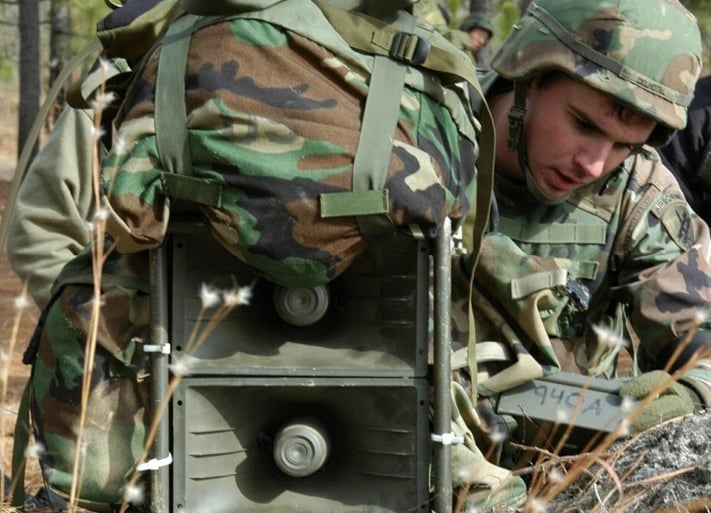
Psychological warfare (PSYWAR) involves the planned, strategic use of propaganda, disinformation, and communication to manipulate the emotions, attitudes, and behaviors of opponents, aiming to break their will to fight, demoralize them, or influence decisions. It covers a wide range of techniques, including cyber operations, social media manipulation, such as troll farms and algorithms (5), propaganda, and even personal manipulation through intimidation.
Goals of Psychological Warfare
Demoralize the enemy: Breaking the willpower, motivation, and morale of military or civilian targets.
Influence behavior/beliefs: Manipulating public opinion, causing, or preventing, specific actions.
Strengthen allies: Boosting the morale of one's own troops or allied populations.
Create chaos/distrust: Causing confusion, spreading distrust in leadership, or eroding trust in information sources.
Techniques in Psychological Warfare
Digital Operations: Using AI, algorithms, bots, and tailored messages to manipulate perception via social media (5).
Propaganda: Disseminating leaflets, broadcasts, or messages designed to influence (3).
Misinformation/Disinformation: Spreading lies to trigger desired reactions or create panic.
Show of Force: Creating the illusion of superior force size or capabilities to cause surrender without fighting (9).
Targeting Emotions: Appealing to fear, paranoia, or patriotism.
Types of Psychological Warfare
Black Propaganda: Misinformation from an unacknowledged or false source.
White Propaganda: Information from an acknowledged, authorized source.
Grey Propaganda: Information from a source that is unclear or suspect.
Cyber/Information Warfare: Using digital tools to disrupt, manipulate, or misinform.
Defending Against Psychological Warfare
Information Literacy: Critically evaluating sources and identifying potential disinformation.
Emotional Regulation: Recognizing when information is tailored to trigger an emotional response rather than providing facts.
Verifying Information: Checking news and reports from multiple, independent, and reliable sources.
Psychological warfare is often used in both war zones and to influence politics, such as encouraging citizens to oppose their government or, as suggested by a user on Reddit (6) https://www.reddit.com/r/workplace_bullying, causing psychological strain in personal or professional settings (4, 6).
War on the Homeland
Homeland Security Tactics and Training
Defending America: Redefining the Conceptual Borders of Homeland Defense: Terrorism, Asymmetric Warfare and Nuclear Weapons, Final Draft, https://csis-website-prod.s3.amazonaws.com/s3fs-public/legacy_files/files/media/csis/pubs/terrorasymw%26chem.pdf
NCJ Number: 190334
Author(s): Anthony H. Cordesman
Date Published: February 2001
Length: 41 pages
Annotation: This document discusses nuclear and radiological weapons as means of attack.
Abstract
A number of countries other than the United States are conducting nuclear weapons research efforts, have carried out enough nuclear research to deploy weapons relatively quickly, or could build a nuclear weapon if they could find a source of fissile materials. As a result of this effort, homeland defense must deal with the cumulative probability of nuclear attack over at least a 25-year period. There are many uncertainties associated with the employment of nuclear weapons in covert, proxy, or terrorist/extremist attacks on the United States. Two key questions shaping the nuclear threat are whether state actors could obtain such weapons and would take the risk of using them covertly or giving them to a proxy, and whether terrorists could obtain such weapons or obtain the fissile material they need to make such weapons. The basic design features and technology needed for nuclear weapons are well understood. Production of fissile material is probably impossible for most terrorist and extremist movements. It is hard to make specific recommendations about how to respond to nuclear attacks because the needed planning and technical assessments have not yet been performed. Radiological weapons that employ conventional explosives or other means to scatter radioactive material are another important means of attack. Unlike nuclear weapons, they spread radioactive material contaminating personnel, equipment, facilities, and terrain. This material acts as a toxic chemical to which exposure eventually proves harmful or fatal. The effectiveness of these weapons is controversial, but the likelihood of use by terrorists is higher than with nuclear weapons. The material could be spread by “dirty bombs” designed to spread radioactive material through passive (aerosol) or active (explosive) means. Additional study is needed of the different effects and risks of radiological weapons. 3 tables, 2 charts.
Corporate Author: Ctr for Strategic and International Studies
Address: 1800 K Street, N.W., Washington, DC 20006, United States
Sale Source: Ctr for Strategic and International Studies
Address: 1800 K Street, N.W., Washington, DC 20006, United States
Publication Format: Document
Publication Type: Legislation/Policy Analysis
Language: English
Country: United States of America
Downloaded September 19, 2001
what are training and tactics used by homeland security, fusion centers and commuity watch
Homeland Security (DHS), fusion centers, and community watch groups employ a layered, intelligence-driven approach combining advanced technology, data analysis, and proactive surveillance. Key methods include
Suspicious Activity Reporting (SAR), intelligence fusion, cybersecurity integration, and community-based crime prevention training to identify, prevent, and respond to threats.
Homeland Security (DHS) Training & Tactics: DHS focuses on nationwide threat prevention through specialized training and operational tactics:
Training: FEMA's National Training and Education Division (NTED) provides courses on disaster response, critical infrastructure protection, and counter-terrorism.}
Tactics: Utilization of intelligence analysis, border security measures, cybersecurity defense, and structured, often coercive, interior enforcement practices.
Programs: TRIPwire (Technical Resource for Incident Prevention) for explosive threat identification and 28 CFR Part 23 training for intelligence systems.
Fusion Centers Training & Tactics: Fusion centers act as focal points for sharing, analyzing, and acting on information between state, local, and federal entities:
Training: Criminal intelligence training, privacy/civil liberties protection workshops, and analytical skill building.}
Tactics: The Suspicious Activity Reporting (SAR) process, combining local data with federal intelligence to map regional threats, and integrating cybersecurity with physical infrastructure protection.}
Focus Areas: Public health integration, cybercrime prevention, and active shooter preparedness.
Community Watch Training & Tactics: Community watch programs, often supported by local law enforcement, focus on grassroots observation and prevention:
Training: Neighborhood watch training sessions, risk assessment training, and crime prevention techniques provided by local police departments or security firms.}
Tactics: Active observation of surroundings (reporting "see something, say something"), securing residential perimeters, and building communication networks with local law enforcement.}
Field Training: Detailed operational training, including specific post orders and reporting procedures for security officers.
These entities collaborate to create a comprehensive safety network where local, community-level observations are fed into regional and national intelligence systems.
What have TI's seen these agencies and people do?
Join us in advocating against the misuse of technology.
contact@targetedhumans.org
© 2025. All rights reserved.
Targeted Humans Inc.